
SINK INSTALLATION
Professional Sink Installation for Kitchens & Bathrooms
Replacing an old sink, renovating a kitchen or bathroom, or installing a new fixture? Proflow installs sinks with careful attention to mounting, sealing, drainage and plumbing connections.
KitchenSink Installation
BathroomSink Installation
ReplacementExisting Sinks
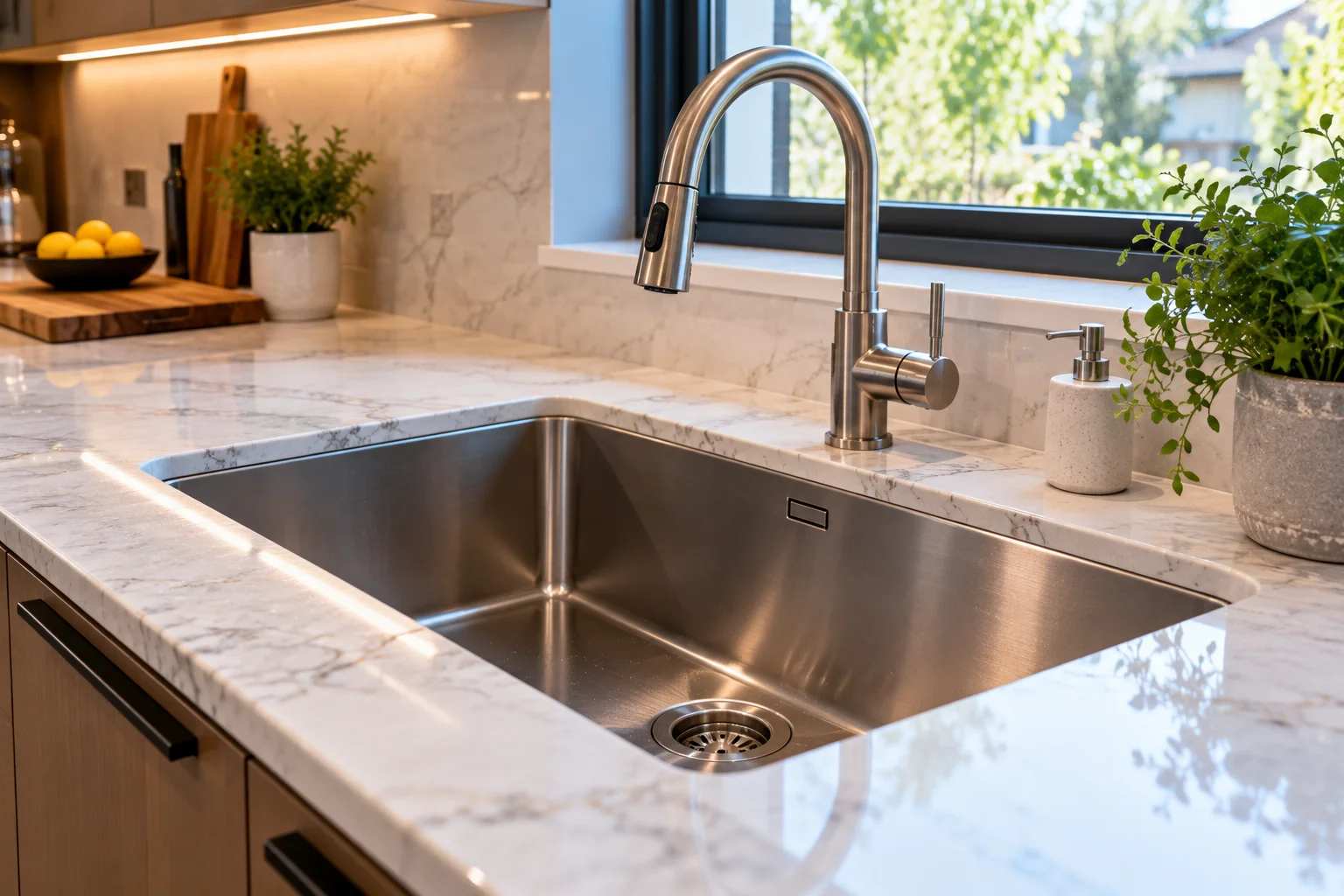
THE FINISHED SINK IS ONLY HALF THE JOB
A Sink Has to Fit the Space and the Plumbing Behind It
Sink installation involves more than placing a fixture into a countertop. The sink needs to suit the opening and mounting arrangement, sit securely, seal correctly and connect properly to the drainage system. Depending on the project, faucet, water supply and other under-sink connections may also need to be considered.
This becomes particularly important when replacing an older sink with a different style, depth or configuration. A fixture that physically fits the countertop may still change the position available for the drain, trap, faucet or other plumbing below.
Proflow can assess the existing setup and complete the plumbing side of a new or replacement sink installation so that the finished fixture isn’t just attractive above the counter—it works correctly underneath it as well.
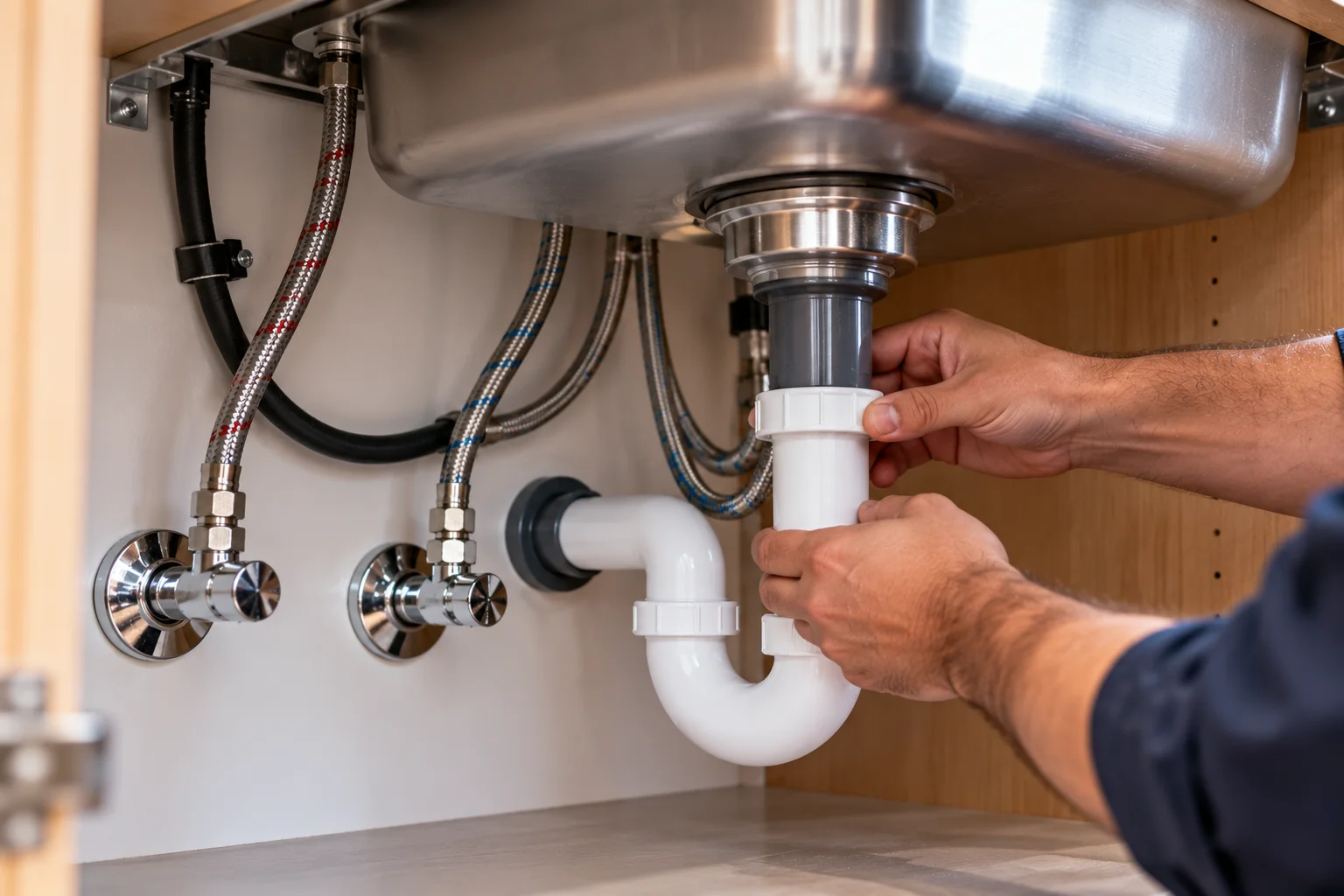
What happens below matters.
Drain alignment, fittings and accessible plumbing connections
are part of a complete installation.
UNDER THE COUNTER
The Plumbing Has to Work With the New Sink
A new sink can change the geometry beneath the countertop. Bowl depth, drain position and fixture configuration all affect the space available for drainage and other connections.
During installation, the existing plumbing should be checked rather than assuming every old connection will line up perfectly with the new fixture.
01
Drain Connection
The sink outlet needs to connect properly with the trap and existing drainage arrangement.
02
Mounting & Support
The installation method needs to suit the sink type, countertop and intended configuration.
03
Sealing
Appropriate sealing helps prevent water from migrating around the fixture and into surrounding materials.
04
Final Testing
Water is run through the completed setup and accessible connections are checked for proper drainage and leaks.
SINK TYPES & APPLICATIONS
Different Sinks Create Different Installation Requirements
Sink style affects how the fixture meets the countertop, how it is supported and how much room remains for plumbing beneath it.
Undermount Sinks
Installed beneath the countertop for a clean, continuous counter edge. Proper support, positioning and sealing are particularly important with this configuration.
Drop-In Sinks
The sink rim sits above the countertop opening. Correct fit and sealing around the perimeter help create a clean and functional installation.
Bathroom & Vanity Sinks
Bathroom installations need to work with the vanity, countertop, faucet arrangement, drain assembly and available cabinet space.
Utility & Laundry Sinks
Utility sinks prioritize function and capacity, but still require appropriate drainage, water connections and secure installation.
BEFORE INSTALLATION
Will the New Sink Work With the Existing Setup?
This is one of the most important questions when replacing an existing sink. A different-looking fixture can also mean different dimensions and plumbing requirements.
01
Countertop Opening
The sink dimensions and installation style need to be compatible with the existing or newly prepared opening.
02
Sink Depth
A deeper bowl occupies more cabinet space and can change how the drain connects to the existing plumbing.
03
Drain Position
Centre, rear and offset drain positions can affect the arrangement required underneath the sink.
04
Faucet Configuration
Faucet mounting holes and available counter or sink space should suit the faucet being installed.
05
Cabinet Space
Drainage, water lines and other components need enough usable space beneath the new fixture.
06
Existing Plumbing Condition
Older valves, fittings or drain components may need attention when the existing fixture is removed.
REPLACING AN EXISTING SINK
Changing the Sink Can Reveal More Than You Expect
Removing an older sink exposes areas that normally remain hidden. Existing seals, drain components and plumbing connections can then be inspected more clearly.
If the new sink has different dimensions or a different drain location, some of the under-sink plumbing may need to be adjusted so the new fixture can connect correctly without forcing unsuitable alignments.
If your existing sink is still in usable condition and the problem is limited to a leak or plumbing connection, replacement may not be necessary.
Explore Sink Repair →
HOW INSTALLATION WORKS
From Existing Setup to Finished Installation
01
Assess
Review the sink configuration, mounting arrangement, countertop opening and accessible plumbing.
02
Prepare
Remove the previous fixture where required and prepare the installation area and plumbing connections.
03
Position & Secure
Fit the sink in the intended position using an installation approach appropriate to the fixture and setup.
04
Connect Plumbing
Connect the drain and applicable fixture plumbing, making necessary adjustments to accessible connections.
05
Seal
Complete appropriate sealing around relevant fixture interfaces to help manage water at the installation area.
06
Test
Run water, confirm drainage and inspect accessible connections for leakage before completion.
+
INSTALLING A NEW FAUCET TOO?
Complete the Sink Setup at the Same Time
Sink replacement is often paired with a new faucet. The faucet configuration should be considered before installation so the fixture, mounting arrangement and plumbing connections work together.
PLANNING A REPLACEMENT?
Useful Things to Know Before Choosing the Sink
If you’re purchasing the sink yourself, dimensions matter. Don’t rely only on the visible width of the existing fixture. The countertop opening, cabinet width, bowl depth, mounting style and drain position can all influence compatibility.
If you’re also replacing the faucet, consider both fixtures together. Faucet-hole configuration, clearance and the available space beneath the counter can affect the final setup.
For renovation projects involving new countertops or cabinetry, coordinating fixture specifications before the surrounding work is finalized can help avoid unnecessary changes later.
COMMON QUESTIONS
Sink Installation FAQ
Questions to consider when replacing or installing a kitchen, bathroom or utility sink.
Can I replace my existing sink with a deeper sink?
Sometimes, but depth affects the available space underneath the fixture and can change the relationship between the sink drain and existing drainage. The dimensions and plumbing arrangement should be checked before assuming a deeper sink will be a direct replacement.
Can you install a sink that I purchased myself?
A customer-supplied sink can be installed when it is appropriate for the intended location, countertop or vanity configuration and available plumbing setup.
Does replacing a sink require changing the drain plumbing?
Not always. However, a different bowl depth or drain position can require adjustment of accessible drain components so the new sink connects correctly.
Can the faucet be installed at the same time?
Yes. Sink and faucet installation are often completed together, provided the faucet configuration is compatible with the sink or countertop and the available plumbing.
Should I repair my existing sink instead of replacing it?
If the fixture itself remains suitable and the problem involves a serviceable drain, connection, seal or nearby plumbing component, repair may be sufficient. Replacement becomes more relevant when the sink is damaged, unsuitable or being changed as part of an upgrade.
What is checked after the new sink is installed?
The completed setup should be tested by running water, confirming drainage and inspecting accessible plumbing connections for signs of leakage.
SINK INSTALLATION
Planning a New Sink?
Get the fixture and the plumbing beneath it working together properly.

