
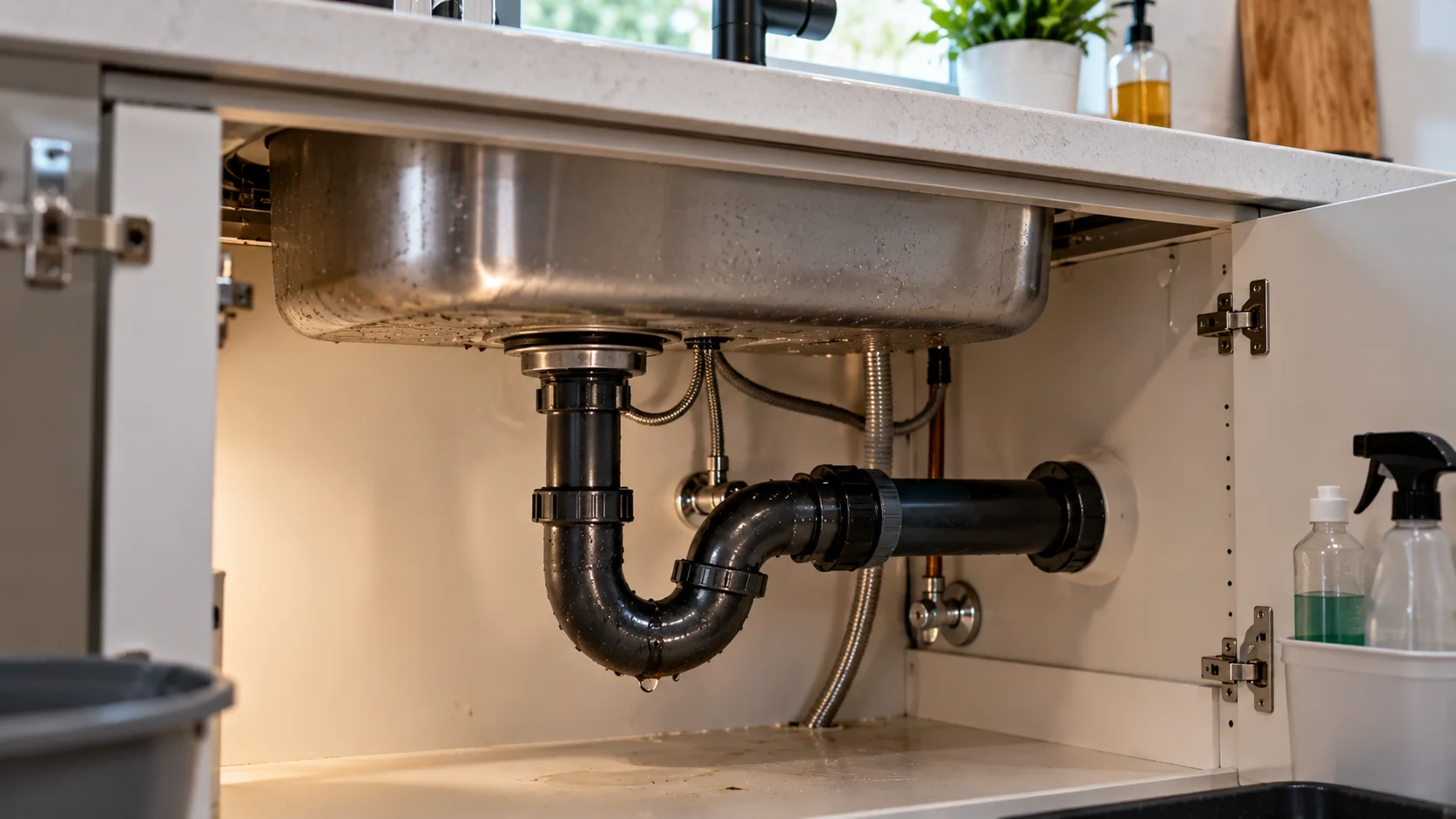
← Drainage ServicesKITCHEN • SINK • DRAINAGE
Kitchen Drain Services in British Columbia
Slow kitchen sink? Water backing up? Proflow provides kitchen drain service for blockages, buildup and recurring drainage problems in homes and businesses across British Columbia.
COMMON KITCHEN DRAIN PROBLEM
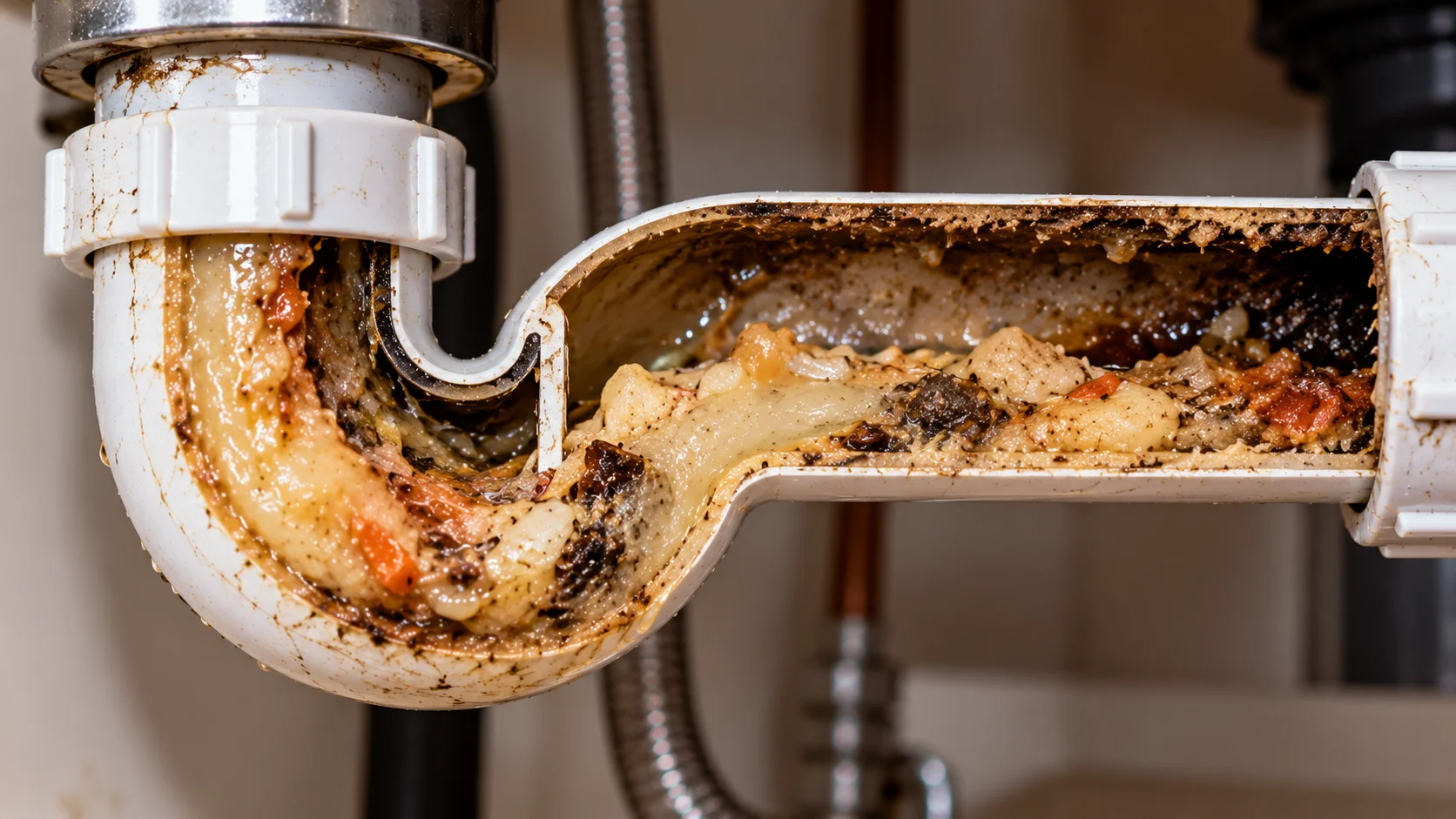
Grease can stick to the inside of drain piping and collect other material over time.
WHAT IS YOUR KITCHEN SINK DOING?
The symptom gives us somewhere to start.
↓
EARLY SIGN
Draining Slowly
Water still drains, but noticeably slower than it normally does.
≈
RESTRICTED
Water Standing in Sink
The drain may be heavily restricted or completely blocked.
↻
RECURRING
Keeps Clogging
Repeated blockages may indicate remaining buildup or a problem farther into the line.
↑
BACKUP
Water Coming Back
Wastewater may not be able to move normally through the kitchen drainage line.
WHY KITCHEN DRAINS CLOG
What goes down the sink can stay inside the pipe.
Kitchen drains deal with a different mix of material than most other drains in a property. Small amounts of grease, oils, food residue and other material can enter the drainage system during normal kitchen use.
Some material can adhere to the inside of the pipe instead of travelling completely through it. As more collects, the usable opening inside the drain can become smaller.
Grease & Fat
Can coat drainage piping as material accumulates.
Food Residue
Small particles can become trapped within existing buildup.
Soap & Detergent Residue
Residue can contribute to deposits inside kitchen drainage.
Foreign Material
Items entering the sink can create or contribute to an obstruction.
BEYOND THE SINK OPENING
Where can a kitchen drain problem occur?
The place where water stops moving is not necessarily the place where the restriction started.
01
SINK
Drain Opening
Where wastewater enters the kitchen drainage system.
02
BELOW
P-Trap
The curved section of piping directly beneath the sink.
03
WALL
Kitchen Drain Line
The drainage piping carrying wastewater away from the sink.
04
DEEPER
Shared Drainage
Kitchen drainage eventually connects with larger building drain lines.
WHAT DOES THE DRAIN NEED?
Clearing the blockage or cleaning the line?
01
BLOCKED NOW
02Clogged Drain
When the immediate problem is a drain that has stopped flowing or is backing up, the obstruction needs to be located and cleared.
Explore clogged drain service →
SLOW OR RECURRING
Drain Cleaning
When buildup is restricting the line or drainage problems repeatedly return, more thorough cleaning may be appropriate.
Explore drain cleaning →
KITCHEN DRAIN WARNING SIGNS
Don’t wait until the sink stops draining completely.
Changes in how the kitchen sink drains can appear before a complete blockage develops.
01
Water takes longer to drain from the kitchen sink
02
Water remains in the sink after normal use
03
The kitchen drain repeatedly becomes clogged
04
Unusual gurgling occurs while water drains
05
Drain odours continue to return
06
Water backs up instead of moving away
GREASE
A COMMON KITCHEN PROBLEM
Why can grease be difficult for kitchen drains?
Grease and cooking fats can enter the drain as liquids or become mixed with hot water during washing. As material travels through the drainage system and conditions change, residue can remain along the inside of the pipe.
Once a layer begins developing, food particles and other debris can collect against it, gradually reducing the space available for wastewater to pass.
?
COMMON QUESTION
Should I keep using drain cleaner?
If a kitchen drain repeatedly becomes slow or blocked, repeatedly treating the visible symptom does not explain why the restriction keeps returning.
Recurring drainage problems may require the line to be assessed so the location and nature of the restriction can be better understood.
KITCHEN DRAIN SERVICE
From the sink to the drain line.
01
Check the Symptoms
Determine how the kitchen sink is behaving and whether any other fixtures are affected.
02
Assess the Drain
Consider whether the restriction appears to be around the sink, trap, kitchen branch line or deeper drainage.
03
Clear or Clean
Use an appropriate approach based on the location and nature of the kitchen drain restriction.
04
Test Drainage
Check water flow after service and determine whether further investigation is appropriate.
NOT ALWAYS JUST THE KITCHEN
What if other drains are acting up too?
If the kitchen sink is the only affected fixture, the problem may be within the kitchen drainage path. If other fixtures are also draining slowly or backing up, the restriction may be farther into shared drainage piping.
Looking at the pattern across the property can help determine whether the problem is isolated or part of a larger drainage issue.
Learn more about clogged drains →
KITCHEN DRAIN FAQ
Common kitchen drain questions
Why is my kitchen sink draining slowly?
Slow kitchen drainage can occur when grease, food residue or other material gradually restricts the inside of the drainage piping. The restriction can be near the sink or farther into the kitchen drain line.
Why does my kitchen drain keep clogging?
A recurring clog can indicate that material remains inside the line after flow has been restored or that another restriction exists farther into the drainage system.
Can grease clog a kitchen drain?
Grease and cooking fats can contribute to kitchen drain restrictions by leaving residue inside drainage piping. Other material can then collect against that buildup.
Why is water standing in my kitchen sink?
Standing water usually means wastewater cannot move through the drain at its normal rate. The line may be severely restricted or blocked.
What if my kitchen sink and other drains are slow?
When multiple fixtures are affected, the restriction may be located farther into drainage piping shared by those fixtures rather than being limited to the kitchen sink.
Is kitchen drain cleaning different from clearing a clog?
Clearing a clog focuses on reopening a blocked drainage path. Drain cleaning may address accumulated material restricting the line more broadly. The appropriate approach depends on the condition of the drain.
KITCHEN DRAIN SERVICE
Get your kitchen sink flowing again.
Slow, blocked or repeatedly clogging? Proflow can assess the kitchen drain and determine the appropriate service.

