EMERGENCY PLUMBING, DRAINAGE, HEATING & GAS
Something Wrong?
Don’t Wait for It to Get Worse.
Burst pipes, major leaks, blocked drains, sewer backups, loss of heat and other urgent plumbing or heating problems can cause more damage the longer they continue. If you need help now, start here.
Plumbing
Leaks, pipes & urgent plumbing
Drainage
Blocked drains & sewer backups
Heating
Furnaces, boilers & no heat
Gas
Gas-system concerns
FIRST RESPONSE
First: Protect People and Property
Not every plumbing, drainage or heating problem is an emergency, but active water damage, sewage, loss of essential heat and certain gas or equipment problems should not be left to develop.
If it is safe to do so, take simple steps to limit further damage while arranging professional help.
01
Active Water Leak?
If you can safely identify the correct water shutoff, stop or reduce the water supply. Move belongings away from spreading water where practical.
02
Drain or Sewer Backing Up?
Stop using affected plumbing fixtures and avoid contact with wastewater. Continued water use can make a drain or sewer backup worse.
03
No Heat?
Check whether the problem affects the whole home and note any fault codes or unusual equipment behaviour without opening combustion or electrical components.
04
Smell Gas or Suspect CO?
Leave the affected area and follow emergency guidance from your gas utility or emergency services. Do not operate switches, flames or equipment while investigating a suspected gas leak.
WHAT’S HAPPENING?
Choose the Emergency That Best Matches Your Problem
Different emergencies require different responses. Select the closest match to understand what to do next and where to get help.
01
02
03
04
05
06
07
08
09
10
11
12
Emergency Plumber
Urgent plumbing problem and you’re not sure which category it falls into.
Get emergency plumbing help →Emergency Drain Cleaning
Severe blockage, overflowing drain or drainage problem that cannot reasonably wait.
Emergency drain help →Burst Pipe
A damaged or ruptured pipe is releasing water and putting the property at risk.
Burst pipe help →Major Water Leak
Water is actively spreading, appearing through ceilings or walls, or accumulating where it shouldn’t.
Major leak help →Sewer Backup
Wastewater is backing up through drains, toilets or other plumbing fixtures.
Sewer backup help →Overflowing Toilet
A toilet continues to rise or overflow and cannot be controlled with normal use.
Overflowing toilet help →No Hot Water
Your water-heating system has stopped providing hot water when service is urgently required.
Emergency hot-water help →No Heat
Your home has lost heating during cold weather or the heating system has unexpectedly stopped operating.
No-heat help →Emergency Furnace Repair
Furnace failure, repeated shutdown or another urgent furnace problem.
Furnace emergency help →Emergency Boiler Repair
Boiler failure affecting heating, hot water or the home’s hydronic system.
Boiler emergency help →Emergency HVAC
An urgent heating, cooling or HVAC equipment problem needs professional diagnosis.
Emergency HVAC help →Gas Leak
You suspect a problem involving natural gas or gas-fired equipment.
Gas emergency information →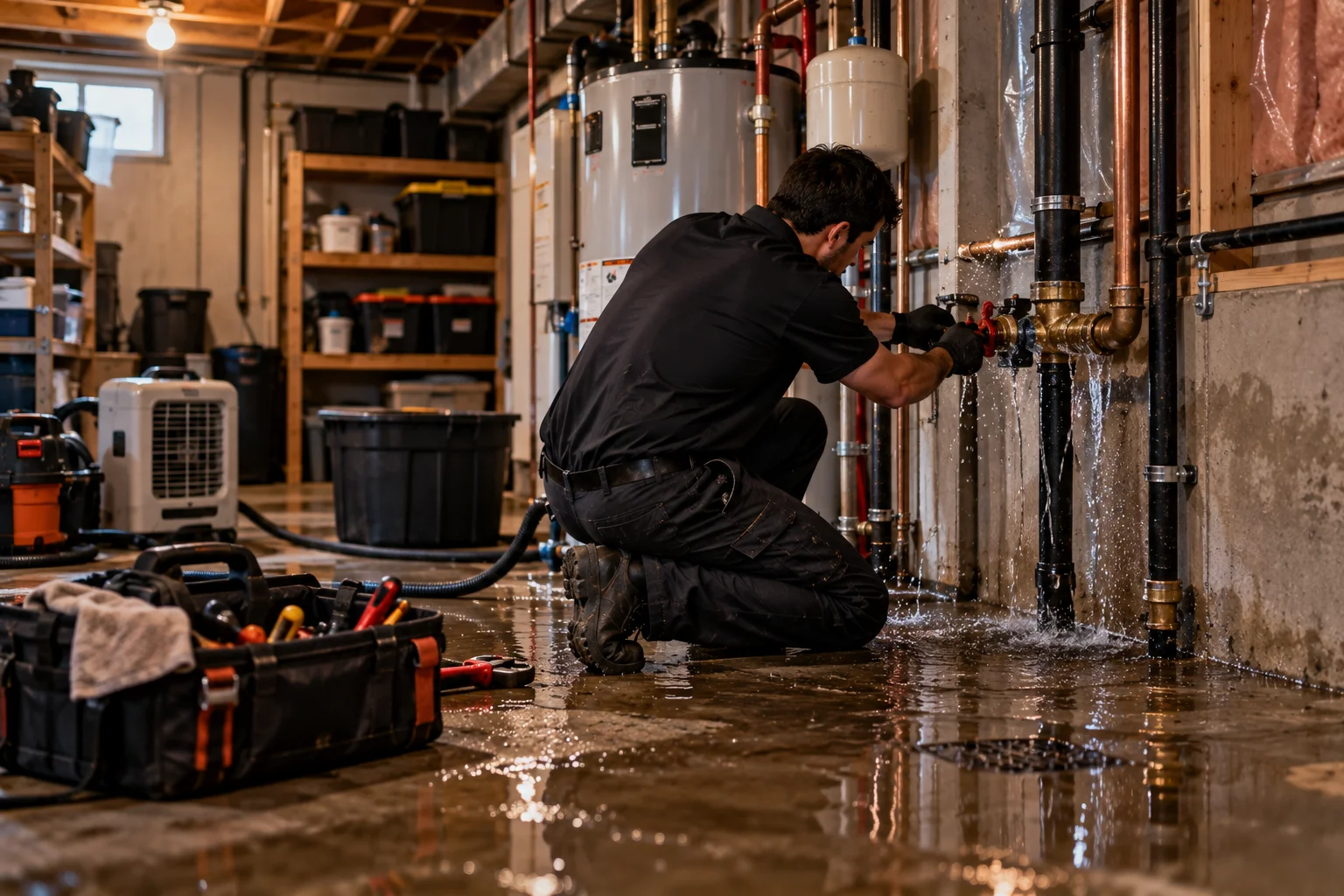
WHEN THE PROBLEM CAN’T WAIT
Control the Immediate Problem. Then Find the Cause.
Emergency service isn’t only about stopping the visible symptom. Once the immediate risk is controlled, the underlying cause still needs to be identified so the problem doesn’t simply return.
01
Assess the situation
Identify the source, affected systems and immediate risks to the property.
02
Limit further damage
Isolate the problem where appropriate and make the affected system safe to work around.
03
Diagnose the failure
Determine why the pipe, drain, water heater, furnace, boiler or other equipment failed.
04
Repair the actual problem
Move from temporary control to the appropriate repair or next service step.
DO I NEED EMERGENCY SERVICE?
Some Problems Can Wait. Others Can Cause Damage Fast.
MORE URGENT
- Water is actively spreading through the property
- A pipe has burst or cannot be isolated
- A drain is overflowing and cannot be contained
- Sewage is entering the home
- A toilet is overflowing uncontrollably
- The home has lost essential heating in cold conditions
- Heating equipment is repeatedly shutting down unexpectedly
- Water is reaching electrical equipment or wiring
MAY BE SCHEDULABLE
- A slow drip that has been safely contained
- A single slow drain with other fixtures working normally
- A minor fixture problem with a working shutoff
- Heating is still operating but needs maintenance
- A non-urgent equipment noise without other warning signs
- A planned repair or replacement with no active damage
Not sure which situation you’re dealing with?
Tell us what you’re seeing through Smart Service Check, or call
if the situation is actively getting worse.
Start Smart Service Check →
SAFETY FIRST
Know When to Stop Troubleshooting
Simple observations can help explain what is happening, but an emergency is not the time to dismantle equipment or experiment with gas, electrical or pressurized systems.
Gas odour
Leave the affected area and follow the emergency instructions of your gas utility or emergency services.
Electrical risk
Do not enter standing water where electrical equipment, outlets or wiring may be energized.
Carbon monoxide concern
If a CO alarm activates or you suspect a combustion-safety problem, leave the area and treat it as a safety issue.
Uncontrolled water
If you cannot safely isolate an active leak, move away from unsafe areas and arrange urgent assistance.
AFTER THE EMERGENCY
From Immediate Response to the Right Repair
Once the urgent situation is controlled, the next step depends on the system involved. Explore the relevant Proflow service area for diagnosis, repair, maintenance or replacement.
PLUMBING
Plumbing Services
Pipes, fixtures, leaks and residential plumbing problems.
Explore Plumbing → DRAINAGE Drainage ServicesBlocked drains, drain cleaning, sewer and drainage problems.
Explore Drainage → HOT WATER Water HeatingWater heaters, tankless systems, repairs and replacement.
Explore Water Heating → HEATING Heating ServicesFurnaces, boilers and home heating systems.
Explore Heating → COOLING Air ConditioningCooling equipment, heat pumps and air-conditioning systems.
Explore Air Conditioning → GAS Gas ServicesGas piping, gas appliances and gas-system service.
Explore Gas Services →EMERGENCY SERVICE QUESTIONS
What Homeowners Usually Need to Know
What counts as a plumbing emergency?
Problems that are causing active property damage, sanitation concerns or cannot safely be contained generally require faster attention. Examples include burst pipes, major leaks, sewer backups and uncontrolled overflows.
Is a blocked drain an emergency?
A slow drain may be schedulable, but a blockage can become urgent when wastewater is backing up, multiple fixtures are affected, a drain is overflowing or normal plumbing use could cause additional property damage.
What should I do if a pipe bursts?
If you can safely identify the correct water shutoff, stopping the water supply can help limit further damage. Keep clear of electrical hazards and arrange professional assistance to locate and repair the failure.
Is no heat an emergency?
It can become urgent depending on outdoor conditions, the people in the home and whether there is any safe alternative heat source. A complete heating failure during cold weather should not simply be ignored.
What should I do during a sewer backup?
Stop using plumbing fixtures that may add more wastewater to the system and avoid direct contact with sewage. The cause of the backup then needs to be identified before normal use resumes.
Should I try to repair an emergency leak myself?
Safely shutting off the appropriate water supply may help control damage, but cutting pipes, opening equipment or making temporary repairs without understanding the system can create additional problems.
What if I don’t know what is causing the problem?
You don’t need to diagnose the system before asking for help. Describe what you can see, where the problem is occurring and whether water, drainage, heat or equipment operation has changed.
When should I stop troubleshooting?
Stop if the situation involves a gas odour, suspected carbon monoxide, unsafe electrical conditions, uncontrolled water or anything that requires opening gas, electrical or combustion equipment to investigate.
NEED HELP NOW?
Don’t Let an Emergency Become More Damage.
If water is spreading, a drain or sewer is backing up, your heating has failed or another plumbing or mechanical problem needs urgent attention, contact Proflow.

