PRESSURE CONTROL • PRV SERVICE
Pressure Reducing Valve Service in British Columbia
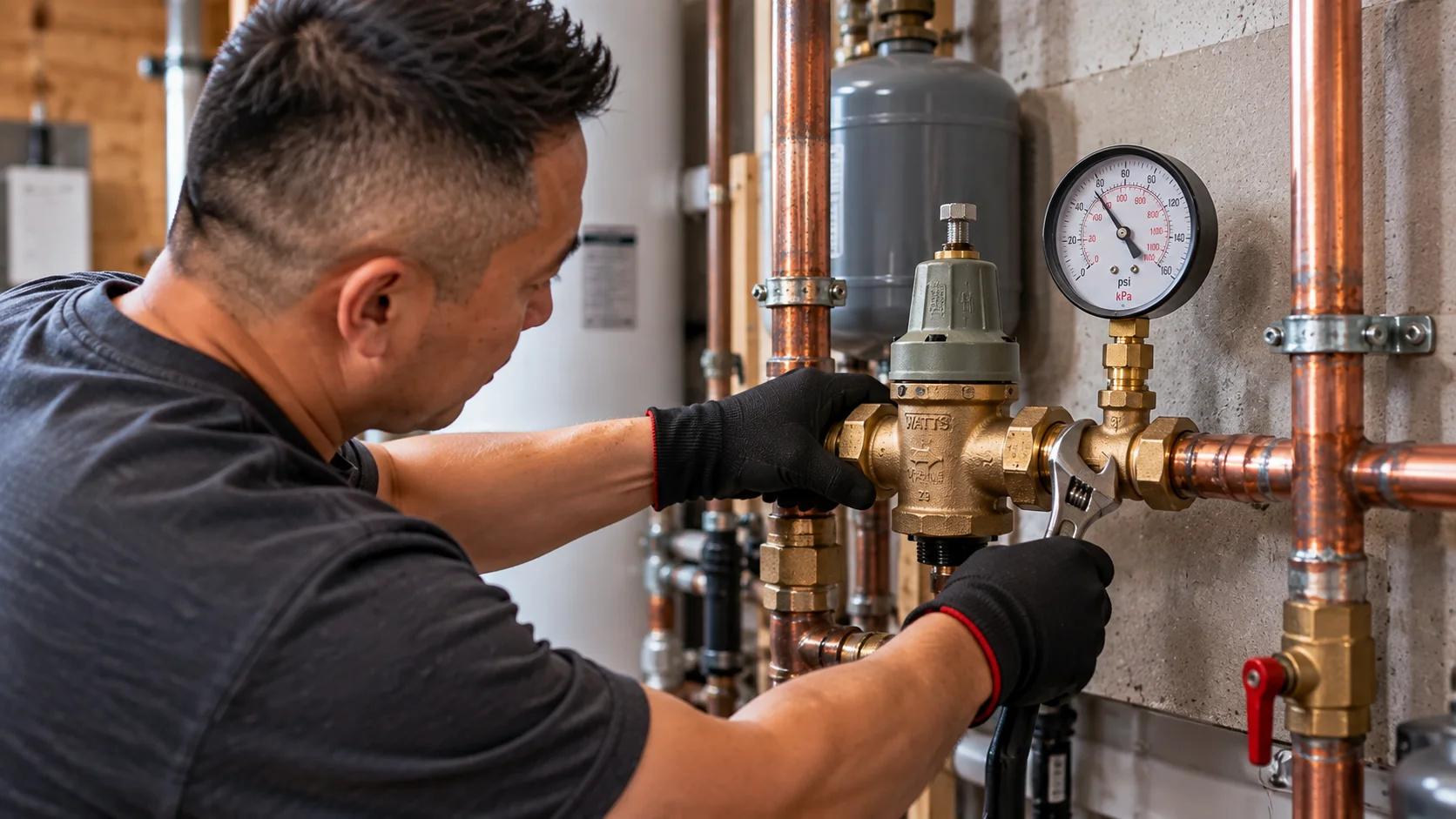
A pressure-reducing valve helps control the water pressure entering your property. Proflow diagnoses, adjusts, repairs and replaces pressure reducing valves for homes and businesses across British Columbia.
Diagnosis
Adjustment
Repair
Replacement
THE BASICS
What Is a Pressure Reducing Valve?
A pressure-reducing valve — commonly called a PRV — controls incoming water pressure before water is distributed through the property’s plumbing system.
When incoming pressure is higher than required, the valve reduces it to a more suitable downstream pressure. This helps maintain controlled water delivery to fixtures, appliances, valves and other plumbing components.
If the valve is no longer regulating pressure correctly, you may notice pressure that is unusually high, weak or inconsistent. The first step is determining whether the PRV is actually responsible or whether the problem is elsewhere in the plumbing system.
Not sure what’s causing your pressure problem? Water Pressure Repair →
HOW IT WORKS
From Incoming Pressure to Controlled Household Pressure
01
Water Enters
Water reaches the property through the incoming supply.
→
02
PRV Regulates
The valve controls the downstream pressure supplied to the plumbing.
→
03
Water Is Distributed
Controlled water pressure continues to fixtures and appliances.
POSSIBLE PRV PROBLEMS
Signs Your Pressure Reducing Valve May Need Attention
These symptoms do not automatically mean the PRV has failed, but they are reasons to check the property’s water pressure and pressure-control equipment.
Water Pressure Too High
Pressure feels unusually forceful at multiple fixtures or appears higher than it was previously.
Low Water Pressure
Water delivery throughout the property may feel weaker than expected even when individual fixtures appear clear.
Pressure Keeps Changing
Pressure may fluctuate instead of remaining reasonably consistent during normal water use.
Noisy Plumbing
Changes in water pressure can sometimes accompany unusual sounds or movement within the plumbing system.
Valve Is Leaking
Visible moisture or dripping around the regulator or its connections should be investigated.
Pressure Won’t Stay Adjusted
If adjustments do not produce stable pressure, further diagnosis may be needed.
WHY PRESSURE CONTROL MATTERS
Water Pressure Should Be Controlled, Not Simply “Strong.”
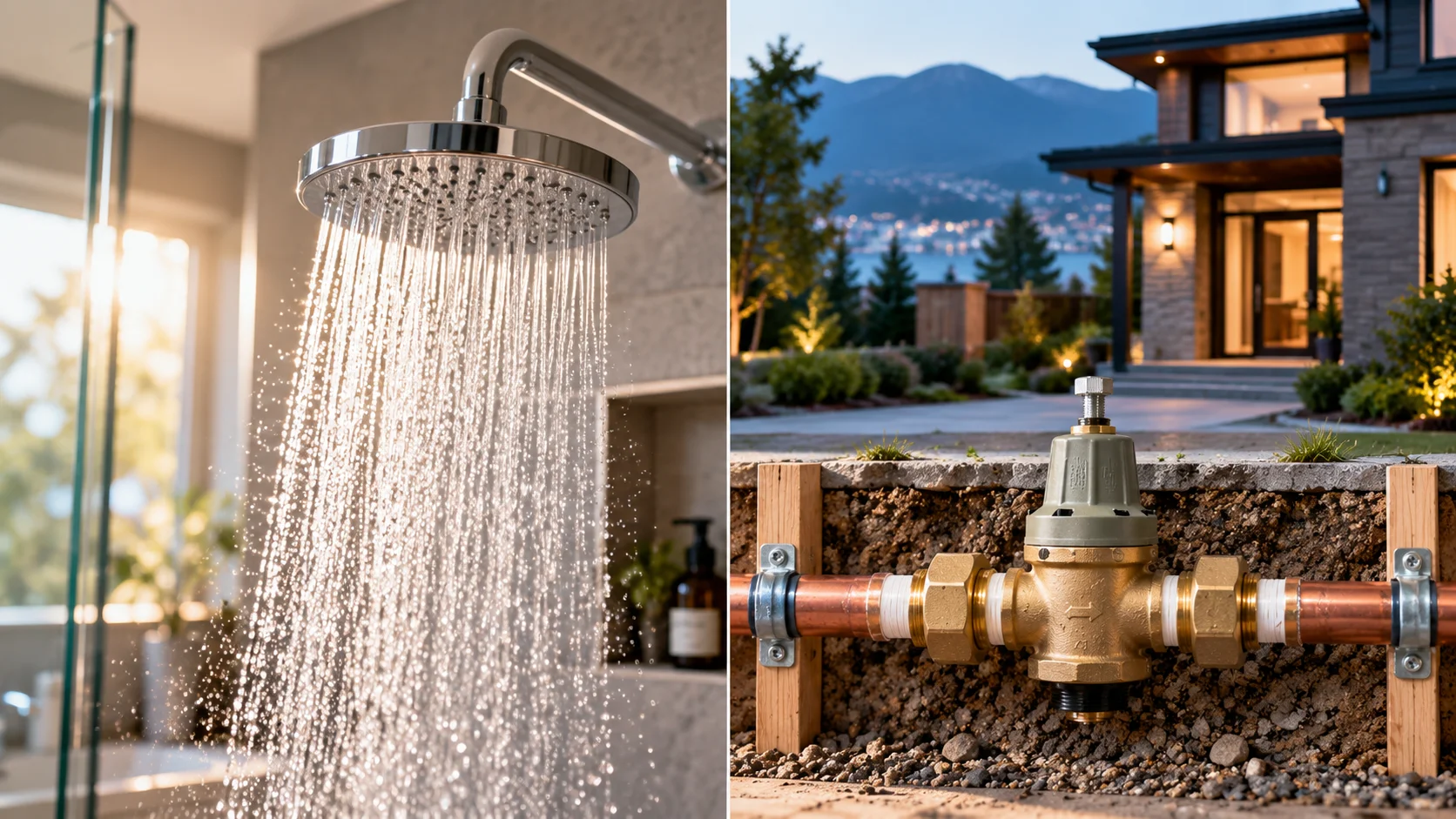
Stronger pressure is not automatically better. Plumbing is designed to operate within appropriate pressure conditions, and excessive pressure can place unnecessary stress on components throughout the system.
01
More controlled water delivery at fixtures
02
Reduced unnecessary stress on plumbing components
03
More consistent pressure throughout normal household use
THE RIGHT REPAIR
Does the PRV Need Adjustment, Repair or Replacement?
CHECK
Pressure Testing
Actual pressure readings help establish what the plumbing system is doing before changes are made.
ASSESS
Valve Condition
The regulator and surrounding connections can be inspected for leaks, deterioration or operating problems.
CORRECT
Service or Replacement
Depending on the condition and diagnosis, the solution may involve adjustment, repair or replacing the pressure-reducing valve.
IMPORTANT
Low Pressure Doesn’t Always Mean the PRV Is Bad.
Pressure problems can also be caused by restrictions, partially closed valves, leaks, aging piping, fixture-specific problems or issues affecting the incoming water supply.
That is why pressure testing and diagnosis matter before deciding that a regulator needs replacement.
PROFLOW PRV SERVICE
How We Approach a Pressure Regulator Problem
The goal is to identify the actual pressure problem before deciding what needs to be changed.
1
Discuss the Symptoms
We start with what has changed and where the pressure issue appears.
2
Test Water Pressure
Pressure readings help establish the condition of the system.
3
Inspect the PRV
The regulator and relevant plumbing are checked for problems.
4
Recommend the Repair
We determine whether adjustment, repair or replacement is appropriate.
PRV FAQ
Pressure Reducing Valve Questions
A regulator is one part of a larger plumbing system, so pressure symptoms should be diagnosed rather than assumed.
What does a pressure reducing valve do?
A pressure-reducing valve controls incoming water pressure before the water continues through the property’s plumbing system.
How do I know if my pressure reducing valve is failing?
Possible signs include unusually high or low pressure, inconsistent pressure, visible leakage around the regulator or pressure that will not remain stable after adjustment. Testing is needed to determine the actual cause.
Can a PRV cause low water pressure?
A regulator that is not operating correctly can contribute to pressure problems, but low pressure can also come from other parts of the plumbing system.
Can high water pressure damage plumbing?
Excessive pressure can place additional stress on fixtures, valves, connections and other plumbing components. If pressure appears unusually high, it should be checked.
Can a pressure reducing valve be adjusted?
Some pressure-reducing valves allow pressure adjustment. Whether adjustment is appropriate depends on the valve, its condition and the pressure readings from the system.
Do you replace pressure reducing valves?
Yes. Proflow can assess pressure-control problems and, where appropriate, replace the pressure-reducing valve.
NEED YOUR WATER PRESSURE CHECKED?
Get the Pressure Problem Properly Diagnosed.
Proflow provides pressure-reducing valve and water pressure services across British Columbia.

