← Heating ServicesFURNACE REPAIR
Furnace Repair for No Heat & Heating Problems
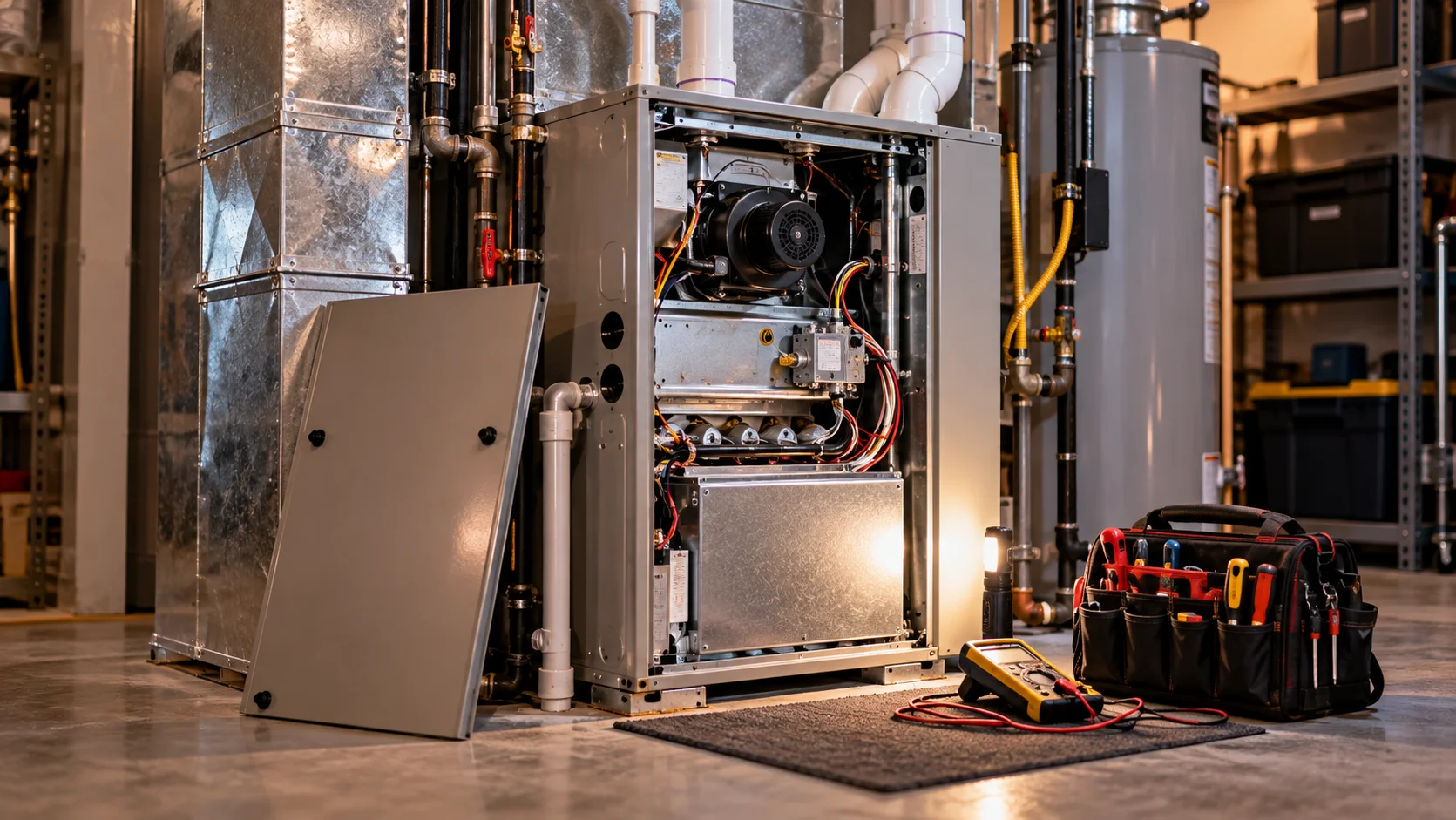
A furnace that stops heating, repeatedly cycles, makes unfamiliar noises or struggles to keep the home warm needs more than a guess at which part has failed. Proflow diagnoses furnace problems to identify what is preventing the system from operating properly before recommending the appropriate repair.
No Heat
System diagnosis
Heating Issues
Find the cause
24/7
Service available
WHAT IS YOUR FURNACE DOING?
Furnace problems don’t always look the same.
Some failures are obvious because the home has no heat. Others develop gradually through poor performance, unusual operation or changes in how the system heats the house.
No Heat
The thermostat calls for heat but the furnace does not produce usable warm air, or the system does not appear to start normally.
Furnace Won’t Start
The system remains inactive even though heating is requested. The cause can involve controls, power, safety devices or furnace components.
Starts, Then Stops
A furnace that repeatedly begins a heating cycle and shuts down before the home reaches temperature may require diagnosis of the operating sequence.
Weak Heating
The furnace operates, but the home warms slowly, struggles to reach the thermostat setting or no longer feels as comfortable as before.
Unusual Noises
New rattling, vibration, squealing, banging or other unfamiliar sounds can indicate a mechanical or operational problem that should be inspected.
Blower Problems
The blower may fail to run correctly, operate at unexpected times or continue behaving abnormally after the heating cycle changes.
UNDERSTANDING THE SYSTEM
A furnace problem can occur at several points in the heating cycle.
A furnace is not simply an appliance that turns on and blows hot air. Several controls and components have to operate in the correct sequence before heat reaches the rooms in your home.
The thermostat first communicates a demand for heat. The furnace then goes through its operating sequence, heat is produced, and the blower moves warmed air through the home’s forced-air distribution system.
Safety controls are also part of furnace operation. If the system detects a condition that prevents safe or normal operation, it may interrupt the heating cycle rather than continue running.
This is why two furnaces with the same symptom can require completely different repairs. “No heat” describes the result; it does not identify the failed component.
Diagnosis before parts
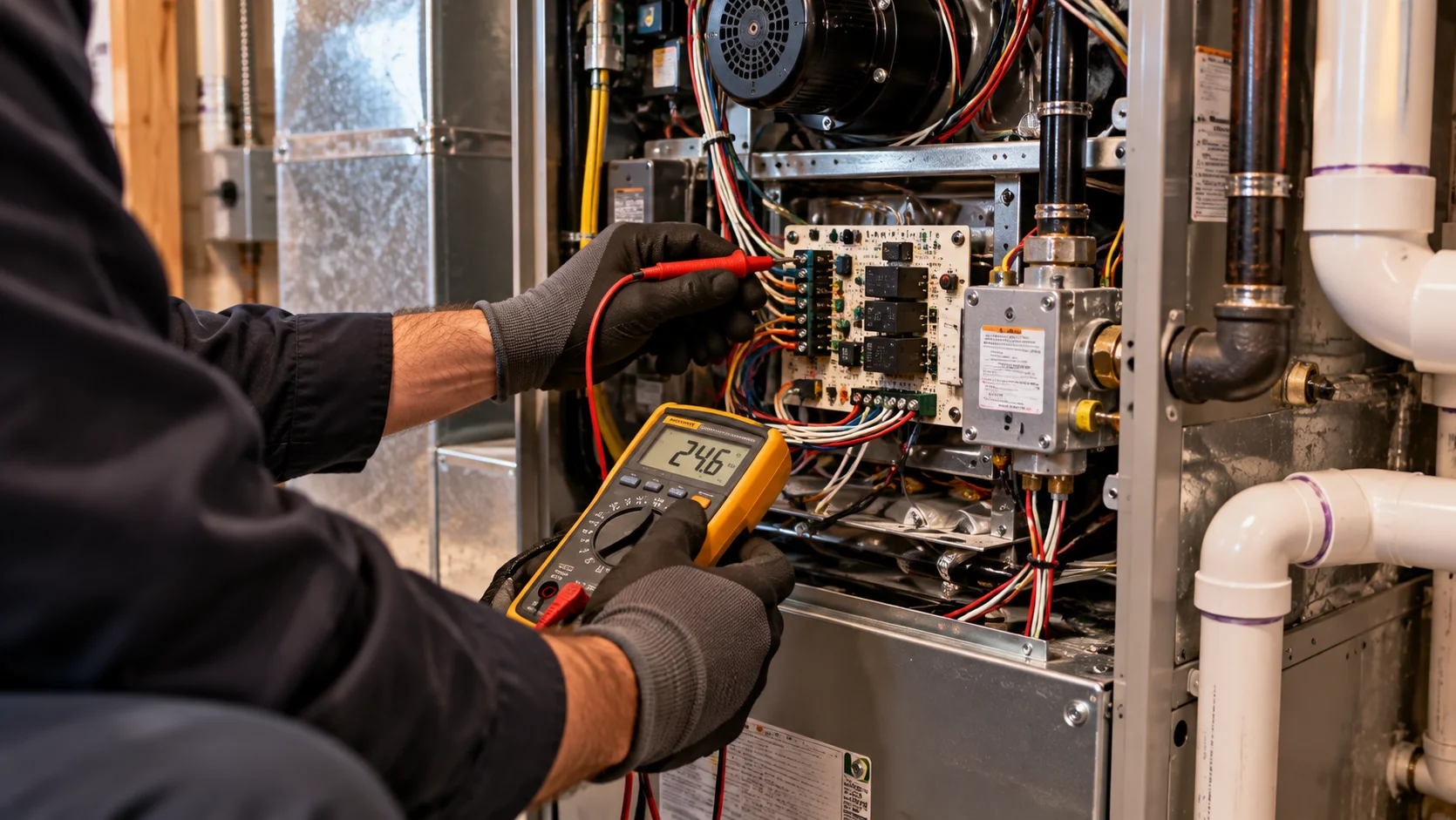
Testing helps determine where the normal furnace operating
sequence is breaking down.
FURNACE DIAGNOSTICS
Find the fault before deciding what to repair.
Replacing a component because it appears related to the symptom is not the same as diagnosing the furnace. A proper assessment looks at how the system responds to a call for heat and where normal operation stops.
01
Confirm the Complaint
Understand what the homeowner has observed and reproduce the problem when possible.
02
Observe Operation
Check how the furnace responds when the thermostat requests heat and follow the operating sequence.
03
Test Relevant Components
Electrical controls, switches, motors and other relevant components can be tested according to the symptom and furnace behaviour.
04
Identify the Cause
The repair recommendation should address the diagnosed fault rather than simply the visible symptom.
INSIDE A FURNACE
Several components can affect whether your furnace heats properly.
The exact configuration varies by furnace, but diagnosis can involve controls, electrical components, ignition-related components, motors, airflow and safety devices.
Controls
The control system coordinates furnace operation and responds to heating demand and safety inputs.
Ignition System
A furnace must successfully complete the required ignition sequence before normal heating can continue.
Blower & Motor
The blower is responsible for moving conditioned air through the forced-air system and into the home.
Safety Devices
Furnace safety controls can interrupt operation when conditions are outside the system’s intended operating range.
Electrical Components
Wiring, switches, relays and other electrical components can affect the furnace’s ability to complete a heating cycle.
Airflow
Restricted or abnormal airflow can affect comfort and furnace operation even when heat-producing components are functioning.
AN IMPORTANT DISTINCTION
Is the furnace failing to make heat—or is the heat failing to reach the rooms?
HEAT PRODUCTION
The furnace isn’t producing heat correctly.
The problem may occur during the furnace operating or ignition sequence, preventing the equipment from producing normal heat.
HEAT DISTRIBUTION
The furnace runs, but comfort is still poor.
A forced-air system also depends on airflow. Blower operation, restrictions and the wider air-distribution system can influence how effectively heat reaches the home.
FURNACE OR THERMOSTAT?
A heating problem can begin before the furnace itself.
The thermostat is part of the control chain that tells the heating system when heat is required. If the furnace and thermostat are not communicating or responding as expected, the resulting symptom can resemble a furnace failure.
Diagnosis should therefore consider the heating controls where relevant instead of automatically assuming the furnace hardware is responsible.
Thermostat Repair →!
NO HEAT DURING COLD WEATHER
No Heat Service →
The indoor temperature can fall quickly when the furnace stops.
If your home has lost heat during cold weather, contact Proflow for assistance. Avoid repeatedly resetting a furnace or opening and altering equipment in an attempt to force it to operate.
BEFORE REQUESTING SERVICE
A few simple observations can be useful.
You do not need to dismantle the furnace to provide useful information. Basic observations can help explain what the system is doing.
✓
Check whether the thermostat is set to request heat and note what temperature is displayed.
✓
Note whether the furnace is completely silent or appears to start part of its normal cycle.
✓
Notice whether air is moving from the vents and whether that air feels warm, cool or unusually weak.
✓
Think about when the problem began and whether it has happened before.
What not to do
Do not bypass safety devices, alter gas components, repeatedly force resets or dismantle furnace components to troubleshoot a heating failure.
REPAIR OR REPLACE?
A furnace fault does not automatically mean you need a new furnace.
The decision should be based on the diagnosed problem and the condition of the system rather than the fact that a failure has occurred.
REPAIR MAY MAKE SENSE WHEN
The existing furnace remains serviceable.
- A specific repairable fault has been identified.
- The equipment is otherwise operating in reasonable condition.
- The furnace has not developed a pattern of repeated failures.
- Repair remains practical for the existing system.
REPLACEMENT MAY BE CONSIDERED WHEN
The bigger picture has changed.
- The equipment has become increasingly unreliable.
- Multiple significant problems are developing.
- The existing furnace is no longer suitable for the property.
- Repair history and equipment condition make replacement worth evaluating.
AFTER THE REPAIR
Repair fixes a fault. Maintenance serves a different purpose.
Furnace repair responds to a problem that already exists. Maintenance is periodic service intended to inspect and maintain an operating system and identify developing concerns.
If the furnace is currently working and you are preparing it for colder weather, maintenance or a seasonal tune-up may be more appropriate than a repair appointment.
FURNACE REPAIR FAQ
Questions about a furnace that isn’t working properly?
Why is my furnace running but not heating the house?
The symptom can involve heat production, airflow, controls or another part of the heating system. Diagnosis is needed to determine whether the furnace is producing heat correctly and whether that heat is being distributed effectively.
Why does my furnace start and then shut off?
A furnace follows an operating sequence and may stop when a required condition is not met or a control interrupts the cycle. The reason should be diagnosed rather than assuming a particular component has failed.
Can a thermostat make it look like the furnace is broken?
Yes. The thermostat is part of the heating-control system. A control or communication problem can affect when the furnace receives and responds to a request for heat.
Should I keep resetting a furnace that stops?
Repeatedly resetting equipment without understanding why it stopped can hide the behaviour needed for diagnosis and is not a substitute for identifying the underlying fault.
Does a noisy furnace need repair?
Some operating sounds are normal, but a new or significantly changed noise deserves attention. Rattling, vibration, squealing or other unfamiliar sounds can provide useful clues during diagnosis.
Does no heat mean I need a new furnace?
No. No heat is a symptom, not a replacement diagnosis. Many furnace faults may be repairable. Replacement should be considered only after the actual problem and overall condition of the equipment are understood.
What is the difference between furnace repair and maintenance?
Repair addresses an existing malfunction. Maintenance is periodic service for an operating system and is intended to inspect, maintain and identify developing concerns.
Can Proflow help if the furnace stops during cold weather?
Yes. Proflow provides heating service and 24/7 assistance. If the home has lost heat during cold weather, contact Proflow and explain that the furnace is not heating.
FURNACE NOT WORKING?
Start with the problem. We’ll find the cause.
Tell Proflow what your furnace is doing and request a heating service assessment.

