
← Drainage ServicesBASEMENT • UTILITY • FLOOR DRAINAGE
Floor Drain Services in British Columbia
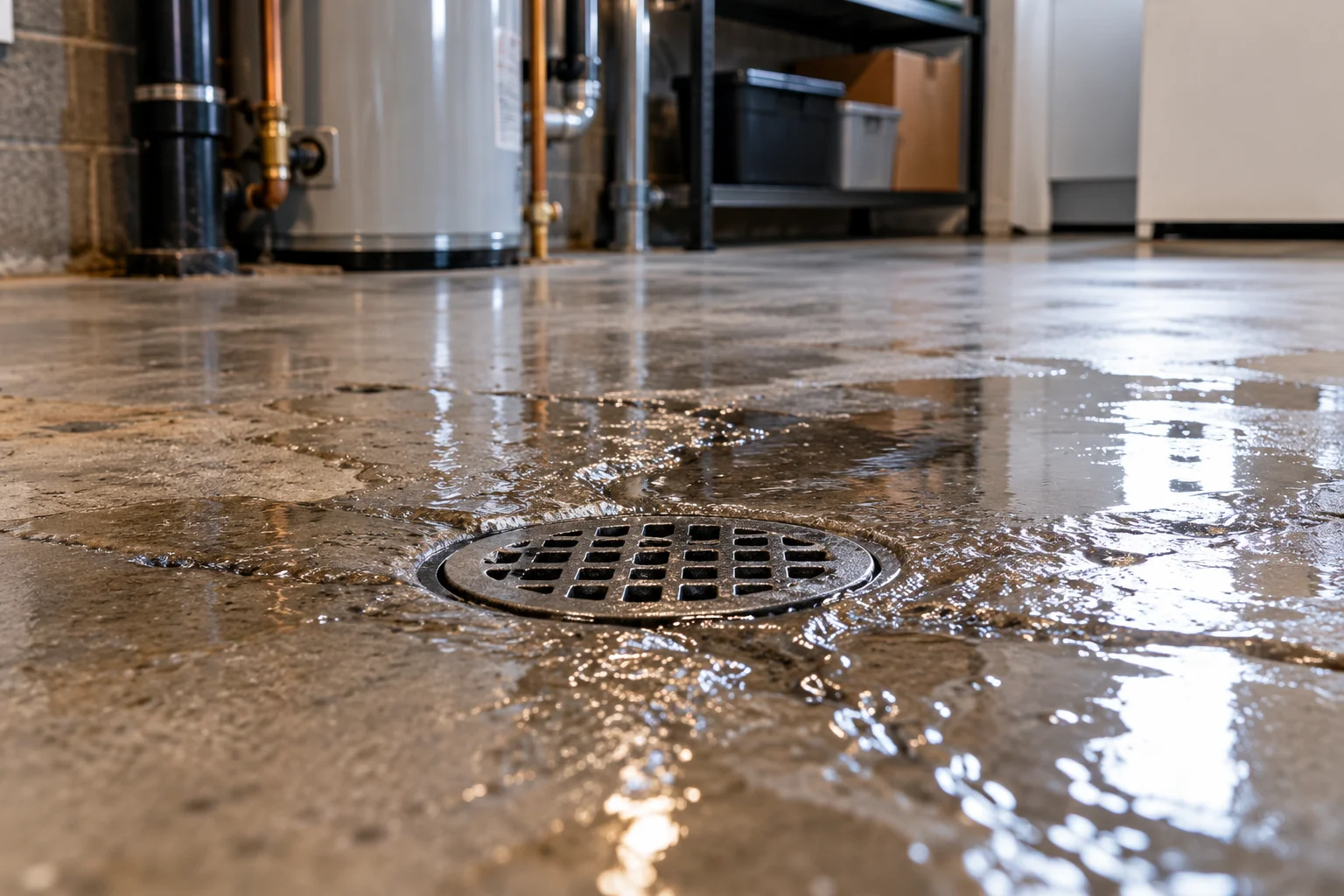
Floor drain backing up, draining slowly or leaving water where it shouldn’t? Proflow provides floor drain service for basements, utility areas, mechanical rooms and other interior drainage areas across British Columbia.
FLOOR DRAIN WARNING SIGNS
01
Standing Water
Water remains around the drain instead of clearing.
02
Slow Drainage
Water reaches the drain but disappears unusually slowly.
03
Water Coming Up
A floor drain that backs up may point to a downstream restriction.
WHAT IS A FLOOR DRAIN?
A drainage point at one of the lowest places in the room.
Floor drains are commonly installed in basements, utility rooms, mechanical areas, garages and other spaces where water may need a direct path into the property’s drainage system.
Unlike a sink or shower drain, a floor drain may sit unused for long periods and then become important when water reaches the floor. If the drain is restricted, blocked or affected by a deeper drainage problem, water may collect or even come back through the drain.
FOLLOW THE WATER
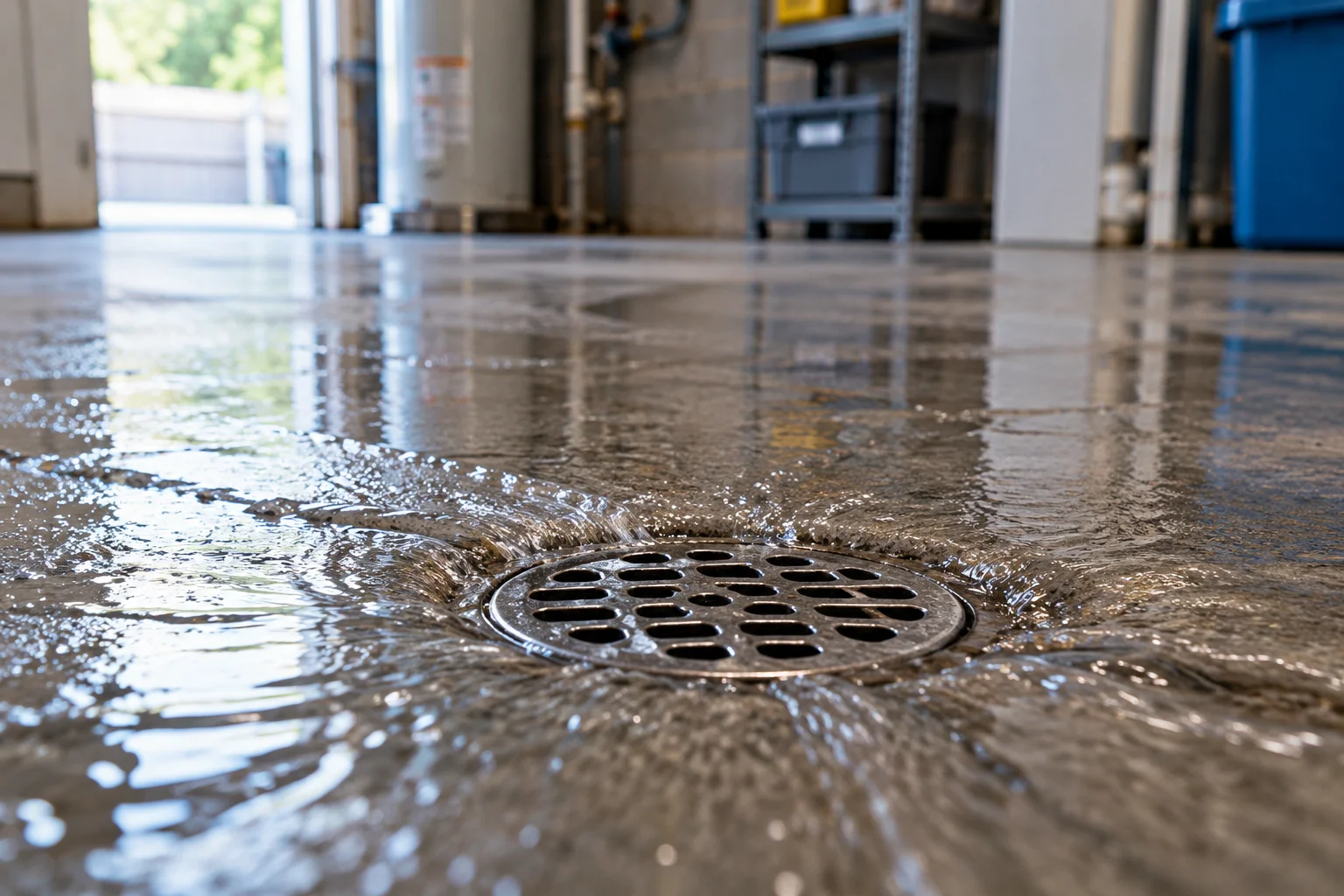
The grate is only the entrance to the drainage system.
Water reaching a floor drain must move through the drain assembly and connected piping before joining larger drainage lines within the property.
01
Floor Surface
Water moves toward the lowest drainage point.
02
Drain & Trap
Water enters the floor drain and passes through its trap.
03
Branch Drain
The floor drain connects into drainage piping below the floor.
04
Main Drainage
Flow eventually joins larger building drainage lines.
DIRECTION MATTERS
Water should go into a floor drain — not come out of it.
↓
NORMAL FLOW
Water Enters the Drain
Water on the surrounding floor moves through the drain and continues into the property’s drainage piping.
FLOOR → DRAIN → PIPE
↑
POSSIBLE BACKUP
Water Comes Up Through the Drain
When wastewater rises through a floor drain, the problem may involve drainage piping farther downstream rather than the drain opening itself.
Explore Sewer Backup →
WHERE FLOOR DRAINS ARE FOUND
Not every floor drain serves the same kind of space.
The surrounding area and what is connected to the drainage system can help determine what may be causing the problem.
01
LOWER LEVEL
Basement Floor Drains
Drainage points in finished or unfinished basement areas where water may collect at floor level.
02
MECHANICAL
Utility & Mechanical Rooms
Floor drainage near water heaters, mechanical equipment, laundry areas and plumbing systems.
03
VEHICLE / STORAGE
Garage Floor Drains
Drains designed to receive water reaching garage or similar floor surfaces.
04
COMMERCIAL
Commercial Floor Drains
Interior floor drainage used in service, utility and other commercial areas.
WHAT ARE YOU SEEING?
The symptom can tell us where to start looking.
01
SLOW
Water sits around the drain
A local restriction may be reducing how quickly the floor drain can accept water.
Drain Cleaning →
02
BLOCKED
The drain won’t take water
A blockage may prevent water from entering or moving through the connected drain line.
Clogged Drain →
03
BACKUP
Water rises through the drain
Water coming upward can indicate a restriction farther downstream in shared or main drainage piping.
Sewer Backup →
04
RECURRING
The problem keeps returning
Repeated drainage problems may justify investigating conditions farther inside the drainage line.
Camera Inspection →
LOOK BEYOND THE FLOOR DRAIN
Check what the other drains are doing.
A floor drain problem does not always begin at the floor drain. If sinks, showers, toilets or other fixtures are also draining poorly, the restriction may be located in drainage piping shared by several fixtures.
That difference matters because clearing debris near the floor drain opening would not resolve a blockage farther downstream.
SHOWER
SINK
FLOOR DRAIN
SHARED DRAINAGE
Branch / Main Drain Line
ANOTHER COMMON QUESTION
Why does a floor drain smell?
Plumbing traps normally hold water that helps separate the room from gases within the drainage system. Because some floor drains are used infrequently, the water within a trap can sometimes diminish over time.
Drain odours can also have other causes. If an odour persists, repeatedly returns or appears alongside drainage problems, the drain and surrounding plumbing may need to be assessed rather than simply masking the smell.
HOW WE APPROACH IT
Start with the drain. Then determine how far the problem goes.
01
OBSERVE
Check Drainage
Assess whether the floor drain is slow, blocked, backing up or showing another drainage symptom.
02
ISOLATE
Check Other Fixtures
Determine whether the problem appears isolated or affects other drainage points within the property.
03
SERVICE
Address the Restriction
Use an appropriate drain service based on the symptoms and apparent location of the problem.
04
VERIFY
Test the Flow
Check drainage after service and determine whether deeper investigation is appropriate.
WHEN IT KEEPS HAPPENING
Recurring backups may need a deeper look.
If a floor drain repeatedly backs up, especially when other fixtures are involved, the underlying issue may be farther into the property’s drainage system.
Depending on the piping layout and symptoms, a camera inspection can help investigate accessible drainage lines and identify conditions that may be contributing to repeated problems.
Explore Drain Camera Inspection →
FLOOR DRAIN FAQ
Common floor drain questions
Why is my floor drain draining slowly?
A slow floor drain may have a restriction within the drain assembly or connected drainage piping. If other fixtures are also slow, the problem may be farther downstream.
Why is water coming up through my floor drain?
Water rising through a floor drain can indicate that wastewater is unable to move normally through downstream drainage piping. A restriction in a shared or main drain line may need to be investigated.
Why does my basement floor drain smell?
Floor drains commonly contain a trap designed to hold water. Because some floor drains are rarely used, trap water can diminish over time. Persistent odours may require further assessment.
Does a floor drain connect to the main drain?
Floor drains generally connect into the property’s drainage piping, which ultimately joins larger drainage lines. The exact configuration varies by building.
Why does my floor drain back up when another fixture is used?
If activity at another fixture causes water to appear at the floor drain, the issue may involve drainage piping shared by those fixtures rather than only the floor drain itself.
When might a drain camera inspection be useful?
A drain camera inspection may be useful when a drainage problem repeatedly returns or symptoms suggest a restriction or other condition farther inside accessible drainage piping.
FLOOR DRAIN SERVICE
Water on the floor needs somewhere to go.
If your floor drain is slow, blocked or backing up, Proflow can assess the drainage problem and determine the appropriate service.

