
PROFLOW HOMEOWNER GUIDE
Why Is My Water Pressure Low?
Weak showers, slow-filling sinks and a sudden loss of water pressure can come from something as simple as a clogged faucet aerator or from a larger issue involving the home’s valves, pressure regulator, piping, water service or municipal supply. The pattern of the problem is usually the best place to start.
Low water pressure is not one specific plumbing problem. It is a symptom, and the cause can be very different depending on where and when the pressure loss occurs.
If only the kitchen faucet is weak, investigating the entire water service would make little sense. If every fixture in the house suddenly loses pressure at the same time, cleaning the kitchen aerator is unlikely to solve it. If your neighbours are experiencing the same problem, the source may not be inside your home at all.
The quickest way to narrow down low water pressure is therefore to look at the pattern: one fixture or many, hot water or cold water, gradual or sudden, constant or only when several fixtures are operating.
What Does “Low Water Pressure” Actually Mean?
Water pressure is the force pushing water through the supply piping toward faucets, showers, toilets and appliances. But what feels like “low pressure” at a fixture is not always a pressure problem in the technical sense.
A restriction can reduce the amount of water coming from a fixture even when the pressure available elsewhere in the plumbing system is normal. A clogged aerator is a good example: the water supply may be perfectly adequate up to the faucet, but mineral deposits or debris at the outlet restrict the flow.
That distinction between pressure and flow matters. A plumber diagnosing the problem is not simply looking at how weak the stream appears. The objective is to find where the loss occurs between the water supply and the affected fixture.
Pressure vs. flow
Pressure describes the force available in the system. Flow describes how much water is moving through it. A restriction in a small section of pipe or fixture can produce poor flow even when incoming water pressure is reasonable.
First Question: One Fixture or the Whole House?
Before changing valves or assuming there is a problem with the municipal supply, walk through the home and test several fixtures. Try both hot and cold water where possible.
What you notice
Where to investigate first
One faucet is weak
Aerator, cartridge, supply line or fixture shut-off
One shower is weak
Showerhead, cartridge or local valve
Only hot water is weak
Hot-water system and hot-side piping
One part of the house is affected
Branch piping, local valves or a localized restriction
Entire home is weak
Main supply, PRV, main valve, leak, service line or broader restriction
Home and neighbours suddenly affected
Municipal water supply or local utility work
This simple comparison can eliminate several possibilities before any plumbing is opened or equipment is replaced.
Common Causes of Low Water Pressure
Low water pressure can originate at the fixture, within the home’s distribution piping, at the pressure-control equipment or on the water service supplying the property. Some causes are minor; others need further investigation.
01
Clogged faucet aerators or showerheads
Sediment, scale or small debris can restrict the openings where water leaves the fixture. This is particularly worth checking when only one fixture is affected.
02
Partially closed valves
A fixture shut-off, main shut-off or another valve that is not fully open can restrict flow through part or all of the plumbing system.
03
Pressure regulator problems
Where a pressure-reducing valve is installed, a malfunction, incorrect setting or aging regulator can affect the pressure delivered downstream to the home.
04
Restrictions inside older piping
Depending on the material and condition of the plumbing, internal corrosion, scale or other restrictions can reduce the effective opening through which water can travel.
05
A leaking water line
A significant leak can affect available flow and pressure. Low pressure accompanied by unexplained water use, damp areas, pooling water or the sound of running water deserves further investigation.
06
Water service-line problems
The pipe supplying the building can itself become restricted, damaged or compromised. This becomes more relevant when the entire home is affected rather than a single fixture.
07
Municipal supply conditions
Utility work, a water-main issue or another distribution system condition can sometimes produce a sudden pressure change beyond the property.
Low Water Pressure at Only One Faucet
When every other fixture works normally, the problem is usually much more localized. Start at the affected faucet rather than assuming the house has a supply-pressure problem.
The aerator at the end of the faucet is one of the first components to inspect. Fine screens and small passages can collect mineral deposits or debris. If removing and cleaning the aerator restores normal flow, the problem was at the outlet rather than deeper in the plumbing.
If both hot and cold flow remain weak with the aerator removed, the restriction may be farther upstream. Fixture shut-off valves, flexible supply lines and the faucet cartridge are possible points to inspect. If only the hot or only the cold side is affected, that provides another clue about which side of the fixture supply needs attention.
Why Is the Water Pressure Low in My Shower?
A weak shower does not automatically mean the whole home has low water pressure. If sinks and other fixtures remain strong, inspect the shower itself first.
Showerhead openings can become restricted by deposits or debris. The shower valve or cartridge can also affect flow. If several fixtures in the same bathroom are weak, however, the problem may be farther upstream in the branch supplying that area.
Comparing the shower with nearby fixtures is therefore useful. A single weak shower suggests a local issue; several weak fixtures begin to point toward the piping or supply serving that section of the house.
What If Only the Hot-Water Pressure Is Low?
If cold water has normal flow but hot water is weak throughout the home, the incoming municipal supply is unlikely to be the whole explanation. The diagnostic focus moves to the hot-water side of the plumbing system.
Possible restrictions may involve valves, piping, connections or components associated with the home’s water-heating system. The exact investigation depends on whether the property uses a conventional storage water heater, tankless water heater or another water-heating arrangement.
A useful test is to compare hot and cold flow at several fixtures. If the difference occurs everywhere, it suggests a system-wide hot-side issue. If it happens at only one faucet, investigate that fixture first.
Low Water Pressure Throughout the Entire House
When showers, faucets and other fixtures throughout the property are all weak, the problem is no longer isolated to a single outlet. The investigation moves progressively closer to the point where water enters the home.
A plumber may consider the position and condition of the main shut-off, the incoming pressure, the pressure-reducing valve where one is installed, evidence of leakage, the condition and size of the supply piping, and the water service entering the property.
The timing is important too. A pressure problem that has gradually become worse over several years suggests a different set of possibilities from pressure that disappeared suddenly this morning.
Gradual pressure loss
May point toward developing restrictions, aging components, deteriorating plumbing or a regulator that is no longer performing as expected.
Sudden pressure loss
Makes a valve change, significant leak, regulator issue, water service event or municipal supply condition more important to rule out promptly.
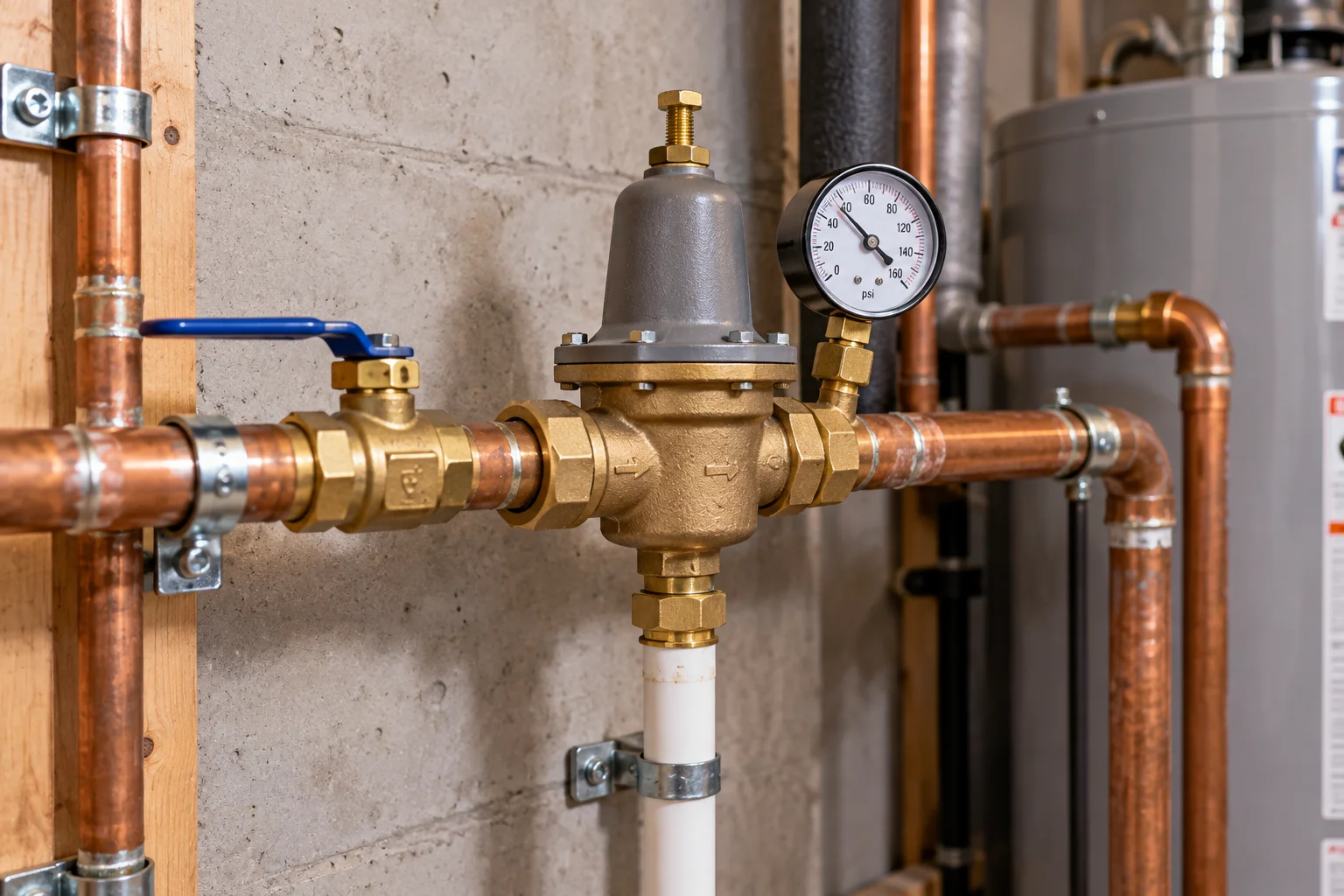
What Does a Water Pressure Regulator Do?
A pressure-reducing valve, often shortened to PRV, is installed where incoming supply pressure needs to be reduced before the water continues through the building’s plumbing system.
Because the valve sits upstream of many or all fixtures, a problem with it can affect the entire home. Symptoms are not limited to low pressure: depending on the failure or setting, pressure can also become unstable or higher than intended.
A pressure regulator should not be adjusted blindly simply because a shower feels weak. The actual pressure should first be measured and the rest of the system considered. Raising pressure without understanding the cause can mask a restriction or place unnecessary stress on plumbing components.
BC CONTEXT
British Columbia drinking-water system design guidance describes approximately 50–70 psi as a normal and peak-hour operating range for distribution systems. That is system-design guidance rather than a promise of a particular pressure inside every home. Elevation, municipal conditions and private plumbing all affect what reaches individual fixtures.
Can Older Plumbing Cause Low Water Pressure?
Yes, depending on the pipe material and its condition. A pipe can look reasonably normal from the outside while the usable opening inside has become smaller.
Internal corrosion and mineral buildup can restrict older metallic piping. When the effective inside diameter becomes smaller, the restriction becomes more noticeable when several fixtures demand water at the same time.
This is one reason older homes require diagnosis rather than an automatic assumption that the municipal pressure needs to be increased. If incoming pressure is adequate but substantial pressure or flow is lost through the building’s piping, the condition of that piping becomes important.
Replacement decisions should be based on the actual plumbing material, condition, extent of restriction, history of leaks and overall system — not simply the age of the house.
Can a Hidden Leak Cause Low Water Pressure?
A sufficiently large leak can reduce the water available to the fixtures in a home. Low pressure by itself does not prove that a pipe is leaking, but other symptoms can make a leak more suspicious.
Look for additional warning signs such as:
- Water appearing where it should not be
- Damp drywall, ceilings, cabinetry or flooring
- Unexplained moisture around the foundation or yard
- The sound of running water when fixtures are off
- A sudden unexplained change in water use
- A sudden pressure loss that cannot be traced to one fixture
Vancouver property owners are responsible for maintaining private plumbing and the private portion of the water service. If a pressure problem is accompanied by evidence of leakage, identifying which side of the property boundary the problem is on becomes important.
Proflow’s leak detection and pipe repair pages explain the related plumbing services in more detail.
When Could Low Water Pressure Be a City-Side Problem?
Not every pressure problem originates inside the house. Vancouver’s guidance makes an important distinction based on how widespread the problem is.
If there is a sudden pressure drop throughout your home and several neighbours are affected too, the municipal water system should be considered. If your home has low pressure or no water but your neighbours do not, the investigation is more likely to involve your property or private plumbing.
The City of Vancouver states that it owns the water service from the water main to the curb stop or shut-off valve. The property owner owns the service from that point into the home.
ASK A NEIGHBOUR
They also lost pressure suddenly
Check for municipal work or a broader water-system issue and contact the appropriate local authority if necessary.
ONLY YOUR HOME
The neighbours have normal water
Check your home’s plumbing, valves, regulator and water service before assuming the public supply is responsible.
How Is Household Water Pressure Tested?
Water pressure can be measured with a pressure gauge connected to an appropriate fixture or test point. A useful diagnosis involves more than recording one number.
Static pressure is measured when water is not actively being used. Flowing or dynamic conditions show what happens when fixtures are operating. A home can appear reasonable under static conditions yet experience a substantial drop when demand increases.
Comparing pressure under different conditions can help separate an incoming-pressure problem from a restriction within the private plumbing system.
Do not diagnose from a number alone.
Pressure readings need context: where the measurement was taken, whether water was flowing, whether a regulator is installed, how the building is piped and which fixtures are experiencing the problem.
What Can I Check Before Calling a Plumber?
You do not need to dismantle the plumbing system to gather useful information. A few observations can make professional diagnosis much faster.
-
1Test several fixtures.
Determine whether the issue affects one fixture, one room or the entire house.
-
2Compare hot and cold water.
Check whether both sides are weak or only the hot-water supply.
-
3Check the affected aerator or showerhead.
If only one fixture is weak, visible debris or scale may be restricting the outlet.
-
4Think about when the problem started.
A sudden change and a slow decline suggest different possible causes.
-
5Ask whether neighbours are affected.
This is especially useful when the entire home suddenly loses pressure.
-
6Look for evidence of leakage.
Check accessible areas for unexpected moisture or signs of escaping water.
Avoid repeatedly adjusting a pressure regulator, forcing old valves, opening sealed plumbing components or increasing pressure without knowing why it is low.
When Should Low Water Pressure Be Checked by a Plumber?
A clogged aerator at one sink is very different from a whole-house pressure problem. Professional diagnosis becomes more useful when the simple fixture-level checks do not explain what is happening.
Whole-house pressure is consistently poor
The incoming supply, regulator, service line and distribution piping may need to be evaluated.
Pressure suddenly dropped
A significant unexplained change deserves investigation, particularly when neighbours are unaffected.
Pressure changes dramatically during use
A large drop when another fixture opens can provide useful clues about supply capacity or restrictions.
There are signs of leakage
Moisture, active leaking or unexplained water movement should be addressed rather than treated only as a pressure problem.
The PRV may be malfunctioning
Actual pressure can be tested before deciding whether adjustment, service or replacement is appropriate.
Older piping appears restricted
The condition of the system can be assessed before assuming that extensive replacement is necessary.
For the service side of this issue, see Water Pressure Repair. If the problem turns out to involve deteriorated piping, the related Repiping information may also be useful.
Frequently Asked Questions About Low Water Pressure
Why did my water pressure suddenly become low?
A sudden change can be associated with a valve position, pressure regulator problem, significant leak, water service issue or municipal supply condition. First determine whether the whole home is affected and whether nearby properties have experienced the same change.
Why is only one faucet losing pressure?
When other fixtures are normal, start with the affected faucet. A restricted aerator, cartridge, supply line or fixture shut-off is more likely than a whole-house supply problem.
Why is my hot-water pressure lower than my cold-water pressure?
If the difference occurs at several fixtures, there may be a restriction somewhere on the hot-water side of the system. If it occurs at only one faucet, investigate that fixture first.
Can a pressure regulator cause low water pressure?
Yes. Where a PRV is installed, its condition or setting can affect downstream pressure. However, pressure should be measured and other possible restrictions considered before the regulator is adjusted or replaced.
Can old pipes cause low water pressure?
They can. Depending on the pipe material and condition, internal corrosion or buildup may restrict the opening inside the pipe and reduce available flow, especially when several fixtures are used simultaneously.
Is low water pressure always the City’s responsibility?
No. In Vancouver, the City is responsible for the water service to the property-side curb stop or shut-off boundary described by the City, while private plumbing beyond that point is the property owner’s responsibility. The location and cause of the problem determine who should investigate it.
Should I increase my water pressure myself?
Not before determining why the pressure appears low. Increasing a regulator setting will not correct a clogged fixture, restricted pipe or leak, and unnecessary pressure can place additional stress on plumbing components.
Sources & Further Reading
This guide was prepared using plumbing-system principles together with current public guidance relevant to British Columbia and Vancouver.
- City of Vancouver — Problems with water quality or pressure.
- City of Vancouver — Turn your water service on and off; information on City and property-owner water-service responsibility.
- Province of British Columbia — Design Guidelines for Drinking Water Systems in British Columbia, including distribution system pressure guidance.
- City of Vancouver — High water consumption and private-property leak guidance.
Municipal procedures, plumbing requirements and water-system conditions can change. For a City-side issue, confirm current instructions with the municipality responsible for your property.
STILL CAN’T FIND THE CAUSE?
Get the pressure problem properly diagnosed.
If low water pressure affects more than one fixture or keeps returning, Proflow can inspect the plumbing system, measure pressure and determine whether the issue is at a fixture, valve, regulator, pipe or water service.

