

COMFORT BEYOND TEMPERATURE
Indoor Air Quality Services
Comfortable indoor air is about more than heating and cooling. Ventilation, filtration, air purification and humidity control can all affect how the air inside your home feels and how the indoor environment performs.
Residential Service
Indoor Comfort Solutions
Serving British Columbia
INSIDE YOUR HOME
The air indoors is part of your home’s comfort system.
Heating and air conditioning control temperature, but temperature is only one part of indoor comfort. Homes also need to manage airflow, airborne particles and moisture.
Depending on the property and the issue being experienced, the appropriate solution may involve ventilation, filtration, purification, humidity control or a combination of systems.
Proflow’s indoor air quality services provide separate paths for these different parts of the indoor environment instead of treating every air-quality concern as the same problem.
FOUR PARTS OF INDOOR AIR
What are you trying to improve?
Start with the part of the indoor environment that best matches what you are noticing in the home.
01
Airflow
Ventilation helps manage how indoor and outdoor air move through the home.
Explore Ventilation →02Filtration
Air filtration addresses particles carried through the home’s air and HVAC system.
Explore Air Filtration →03Purification
Air purification provides another approach to improving the quality of circulating indoor air.
Explore Air Purification →04Humidity
Humidity control addresses indoor air that is excessively dry or carries too much moisture.
Explore Humidity Control →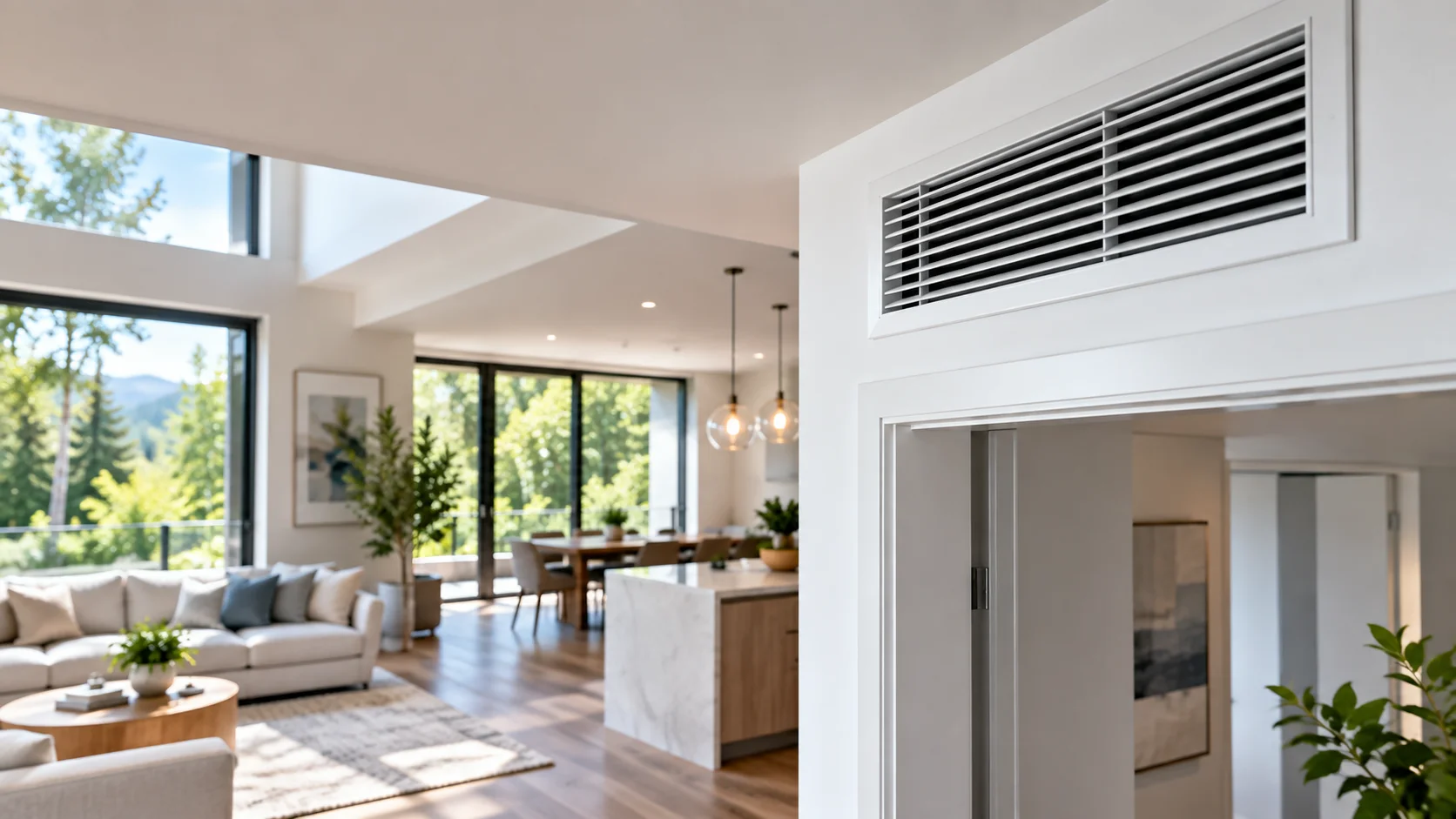
INDOOR AIR
Airflow affects the entire living space.
HOW AIR MOVES
Indoor air is constantly moving through the home.
Air travels between rooms and through ventilation and HVAC pathways. As it moves, the system may also be carrying airborne particles and moisture from one part of the home to another.
This means an indoor air concern is not always isolated to the room where it is noticed. Understanding airflow and the systems serving the property can help determine which type of indoor air quality service is appropriate.
Explore Ventilation Services →
FRESH AIR & VENTILATION
Bringing outdoor air in is only part of the equation.
Mechanical ventilation can help exchange indoor and outdoor air. HRV and ERV systems provide dedicated approaches to controlled air exchange while interacting with the home’s comfort system.
VENTILATION
Residential Ventilation
Explore ventilation solutions focused on moving and exchanging air throughout the home.
Explore Ventilation →HRVHeat Recovery Ventilator
A dedicated ventilation approach for exchanging indoor and outdoor air while recovering heat from the outgoing air stream.
Explore HRV →ERVEnergy Recovery Ventilator
An air-exchange system designed to transfer energy between incoming and outgoing air streams while ventilating the home.
Explore ERV →
CLEANER CIRCULATING AIR
Filtration and purification are related, but they are not the same thing.
The right approach depends on what the indoor air system is intended to address and how it integrates with the home.
HUMIDITY BALANCE
Indoor air can be too dry — or carry too much moisture.
Humidity control is about moving the indoor environment toward a more appropriate moisture level rather than simply adding or removing moisture without understanding the condition.
WHAT ARE YOU NOTICING?
Start with the condition inside the home.
You do not need to identify the equipment first. What you are experiencing can help point toward the part of the indoor air system that deserves attention.
01
Stale or Stuffy Air
Air that feels stagnant may be a reason to look more closely at ventilation and air exchange.
02
Visible Dust
Recurring airborne dust can make filtration an appropriate part of the system to investigate.
03
Very Dry Indoor Air
Excessively dry conditions can indicate a need to evaluate indoor humidity.
04
Excess Moisture
High indoor moisture may require attention to humidity management and ventilation.
05
Uneven Airflow
Rooms that feel noticeably different may justify looking at how air is moving through the home.
06
Air Quality Concerns
When the exact cause is unclear, the broader indoor air system can be assessed before choosing a solution.
INDOOR AIR QUALITY DIRECTORY
Explore all indoor air quality services.
Choose the system or service that best matches what you want to improve inside your home.
INDOOR AIR FAQ
Common questions about indoor air quality.
What does indoor air quality include?
Indoor air quality can involve ventilation, filtration, purification and humidity management. The appropriate area to address depends on the conditions inside the property and the systems already installed.
What is the difference between air filtration and air purification?
Filtration is focused on capturing particles as air moves through a filter. Air purification refers to additional methods of treating circulating indoor air. The appropriate solution depends on the system and the goal.
What does a humidifier do?
A humidifier adds moisture to indoor air when conditions are excessively dry. The correct approach depends on the home’s existing equipment and indoor humidity conditions.
What does a dehumidifier do?
A dehumidifier removes moisture from indoor air when humidity is higher than desired. Moisture conditions can also be influenced by ventilation and other conditions in the home.
What are HRV and ERV systems?
HRV and ERV systems are mechanical ventilation systems that exchange indoor and outdoor air while transferring energy between the outgoing and incoming air streams.
INDOOR AIR QUALITY
Make the air inside your home part of the comfort plan.
Request indoor air quality service from Proflow for ventilation, filtration, purification and humidity-control solutions.

