
TOILET INSTALLATION
Professional Toilet Installation & Replacement
A new toilet needs more than a secure position on the bathroom floor. Correct sizing, a sound flange connection, proper sealing, a reliable water supply connection and careful testing all matter. Proflow installs and replaces toilets with the plumbing beneath the fixture taken into account.
New ToiletsProfessional Installation
ReplacementExisting Fixtures
TestedBefore Completion
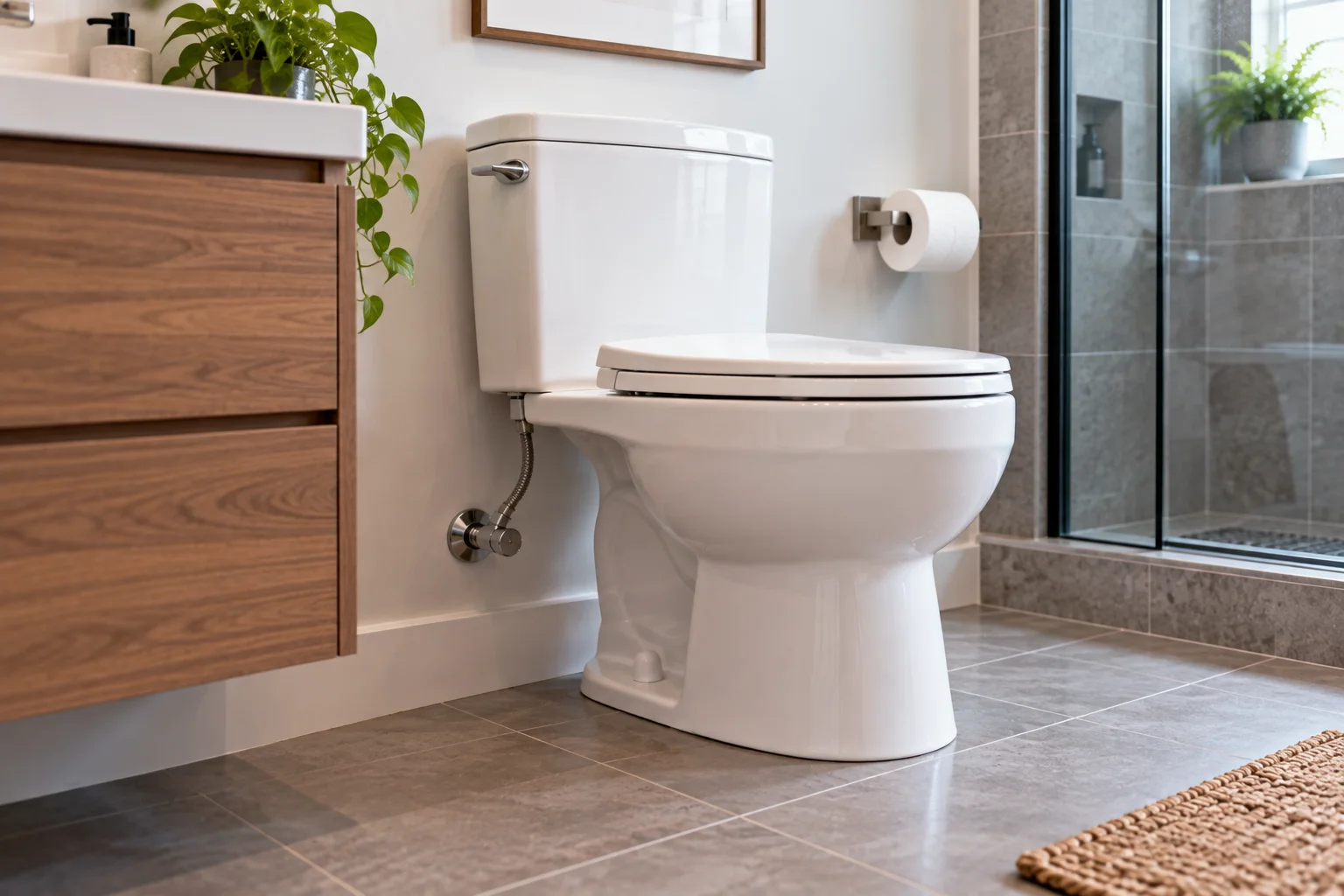
MORE THAN SETTING THE TOILET IN PLACE
The Connection Under the Toilet Is Just as Important as the Fixture
Most of a toilet installation is hidden once the job is finished. Beneath the fixture is the connection to the home’s drainage system, while behind or beside it is the water supply that refills the tank after every flush.
The toilet needs to match the available space and existing plumbing, sit firmly on the finished floor and form an appropriate seal at the drain connection. The supply connection must also operate correctly without leakage.
This is why replacing a toilet should include an assessment of what is underneath the old fixture—not simply removing one toilet and assuming the next one can be installed exactly the same way.
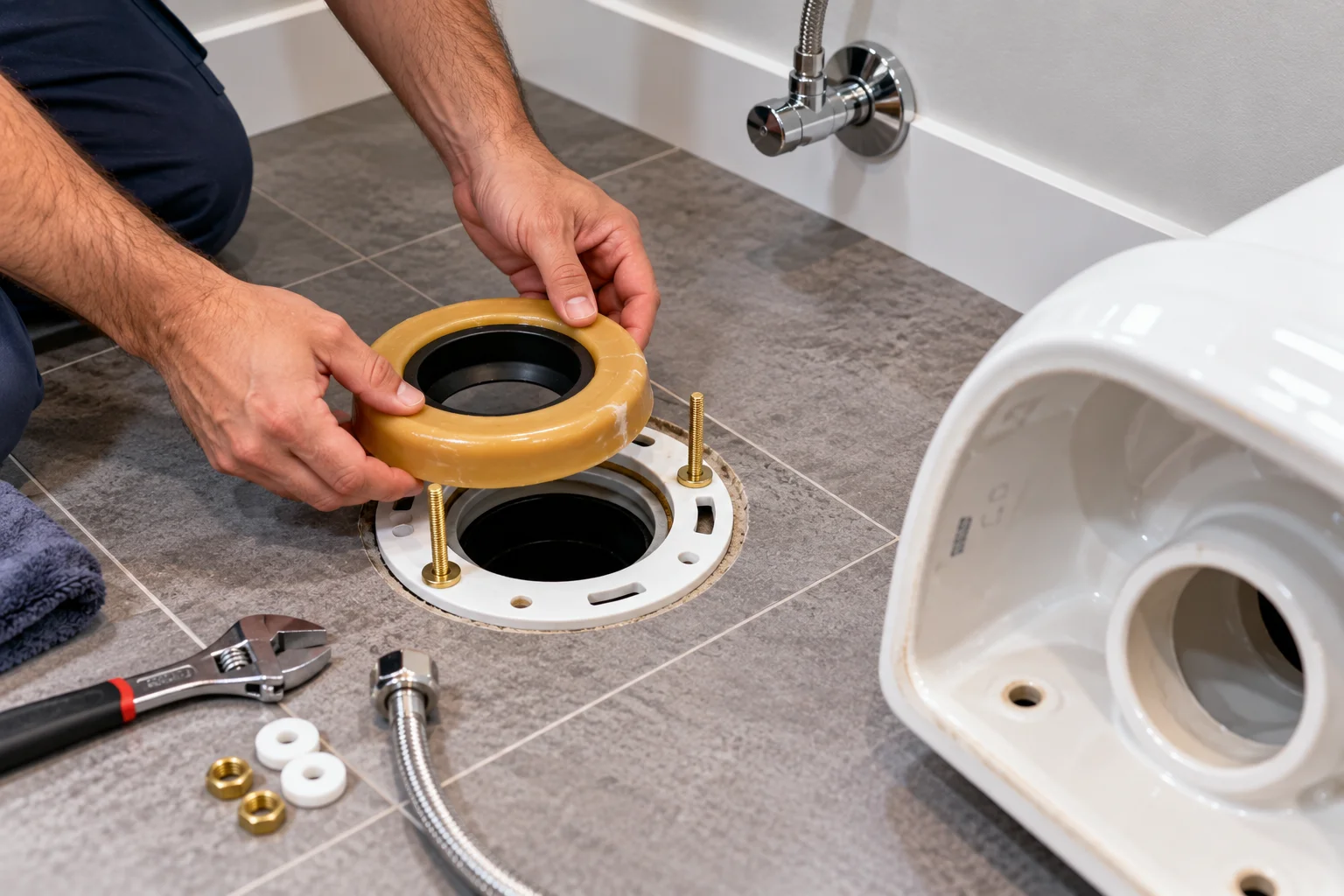
The connection you don’t see
Once the toilet is installed, the flange and sealing
connection are hidden beneath the fixture.
TOILET FLANGE & SEAL
What Actually Connects a Toilet to the Drain?
The toilet sits over a drain opening and connects to the drainage system through the toilet flange. A sealing system between the fixture and flange helps create the connection while the toilet is secured into position.
When replacing an existing toilet, removing the old fixture provides an opportunity to inspect this normally hidden area. Damage, movement, incorrect height or deterioration around the connection can affect the new installation.
01
Inspect the accessible flange and surrounding installation area.
02
Prepare an appropriate seal between the toilet and drain connection.
03
Position the fixture carefully without compromising the connection.
04
Secure and test the completed installation before finishing.
BEFORE BUYING A TOILET
Will the New Toilet Fit the Existing Bathroom?
Appearance is only one consideration. Dimensions and existing plumbing can determine whether a particular toilet is suitable for the space.
Rough-In
The position of the drain connection relative to the finished wall is an important compatibility measurement when selecting a replacement toilet.
Fixture Dimensions
Bowl length, tank dimensions and overall footprint affect clearance within the bathroom.
Water Supply Position
The shutoff valve and supply connection need to remain accessible and compatible with the new fixture.
Floor Condition
The toilet needs a stable installation surface. Existing movement or deterioration around the base should not simply be hidden beneath a new fixture.
TOILET OPTIONS
Different Fixtures, Different Installation Details
Toilet designs vary, so installation requirements can differ between models even when they serve the same basic purpose.
01
Two-Piece Toilets
A separate tank and bowl form the complete fixture. This remains a common residential configuration.
02
One-Piece Toilets
The tank and bowl are integrated into a single fixture, changing handling and installation compared with a traditional two-piece design.
03
Comfort-Height Models
Taller seating heights are available for homeowners who prefer a higher fixture profile.
04
Specialty Fixtures
Some toilet designs introduce different mounting, clearance or connection requirements that should be considered before installation.
REPLACING AN OLD TOILET
Removing the Old Fixture Can Reveal Hidden Problems
The flange, sealing area and floor immediately beneath a toilet are largely hidden during everyday use. Once the old fixture is removed, the condition of this area can be assessed more directly.
If the old toilet rocked, leaked around the base or had been installed over an unsuitable connection, simply placing a new toilet over the same condition may carry the original problem into the replacement installation.
Existing shutoff valves and supply connections can also be reviewed while the fixture is being changed. If something needs attention, it is better identified during installation than after the bathroom has been put back into use.
INSTALLATION PROCESS
From Old Toilet to Finished Installation
01
Assess
Confirm the replacement fixture and existing installation arrangement are suitable.
02
Remove
Shut off and disconnect the existing fixture before carefully removing it from the installation area.
03
Inspect
Check the accessible flange, floor area and relevant plumbing before covering them with the new toilet.
04
Set & Secure
Prepare the sealing connection, position the toilet and secure the fixture appropriately.
05
Connect Water
Complete the water supply connection and prepare the fixture for operation.
06
Test
Fill and flush the toilet, checking operation and accessible connections before completion.
!
A TOILET SHOULD NOT ROCK
Stability Is Part of a Proper Installation
A toilet should remain stable during normal use. Movement can place stress on the connection beneath the fixture and should not simply be accepted as normal.
If an existing toilet moves, the reason should be considered when it is removed. The installation surface, fixture position and connection area can all be relevant.
WATER SUPPLY
The Drain Isn’t the Only Connection That Matters
The toilet also requires a controlled water supply to refill after every flush. The shutoff valve allows the fixture’s water supply to be isolated, while the supply connection carries water to the tank.
During replacement, accessible supply components should be checked for condition and leakage. A new toilet does not automatically correct an existing problem with the plumbing feeding it.
Explore Leak Repair →
DO YOU ACTUALLY NEED A NEW TOILET?
Some Toilet Problems Can Be Repaired Without Replacement
A running toilet, failed fill valve, flushing component problem or serviceable connection does not necessarily mean the entire fixture needs to be removed.
REPAIR
Keep the Existing Toilet
When the fixture remains suitable and the problem involves repairable components or connections, repairing it may be the practical option.
Toilet Repair →
REPLACE
Install a New Fixture
Replacement becomes more relevant when the fixture is damaged, unsuitable, repeatedly troublesome or being changed as part of a bathroom upgrade.
COMMON QUESTIONS
Toilet Installation FAQ
Useful considerations when choosing and replacing a residential toilet.
Can I buy my own toilet and have it installed?
Yes, provided the toilet is suitable for the existing bathroom dimensions, rough-in, water connection and intended installation arrangement.
What does toilet rough-in mean?
Rough-in generally refers to the positioning of the toilet’s drain connection relative to the finished wall. It is an important measurement when selecting a replacement fixture.
Can a new toilet use the existing flange?
Often it can, but the flange should be inspected once the old toilet is removed. Its condition, stability and position can affect the replacement installation.
Why is the seal beneath the toilet important?
The toilet connects directly to the drainage system beneath the fixture. The sealing connection forms part of that installation and needs to be prepared correctly before the toilet is secured.
Can you replace a toilet that rocks or moves?
Yes, but the reason for the movement should be considered when the old fixture is removed. Installing another toilet without addressing an underlying installation issue may not solve the original problem.
Should the water shutoff valve be checked during replacement?
The accessible water supply and shutoff arrangement should be considered during installation because the new toilet still depends on those components for reliable water supply.
How do I know whether to repair or replace my toilet?
The condition of the porcelain, type of failure, frequency of problems, repair practicality and whether you want to upgrade the fixture all contribute to that decision.
Is the toilet tested after installation?
The completed fixture should be filled and flushed so operation, stability and accessible water connections can be checked before the installation is considered complete.
TOILET INSTALLATION
Ready to Replace Your Toilet?
Get the fixture, drain connection and water supply working together as one complete installation.

