
TOILET REPAIR
Toilet Repair for Leaks, Running Toilets & Flushing Problems
A toilet that leaks, runs constantly, refills on its own or struggles to flush can waste water and point to problems inside the tank, around the fixture or within the connected plumbing. Proflow diagnoses the cause before deciding what actually needs repair.
24/7
Service Available
Leaks
Tank, Base & Supply
Flush
Performance Problems
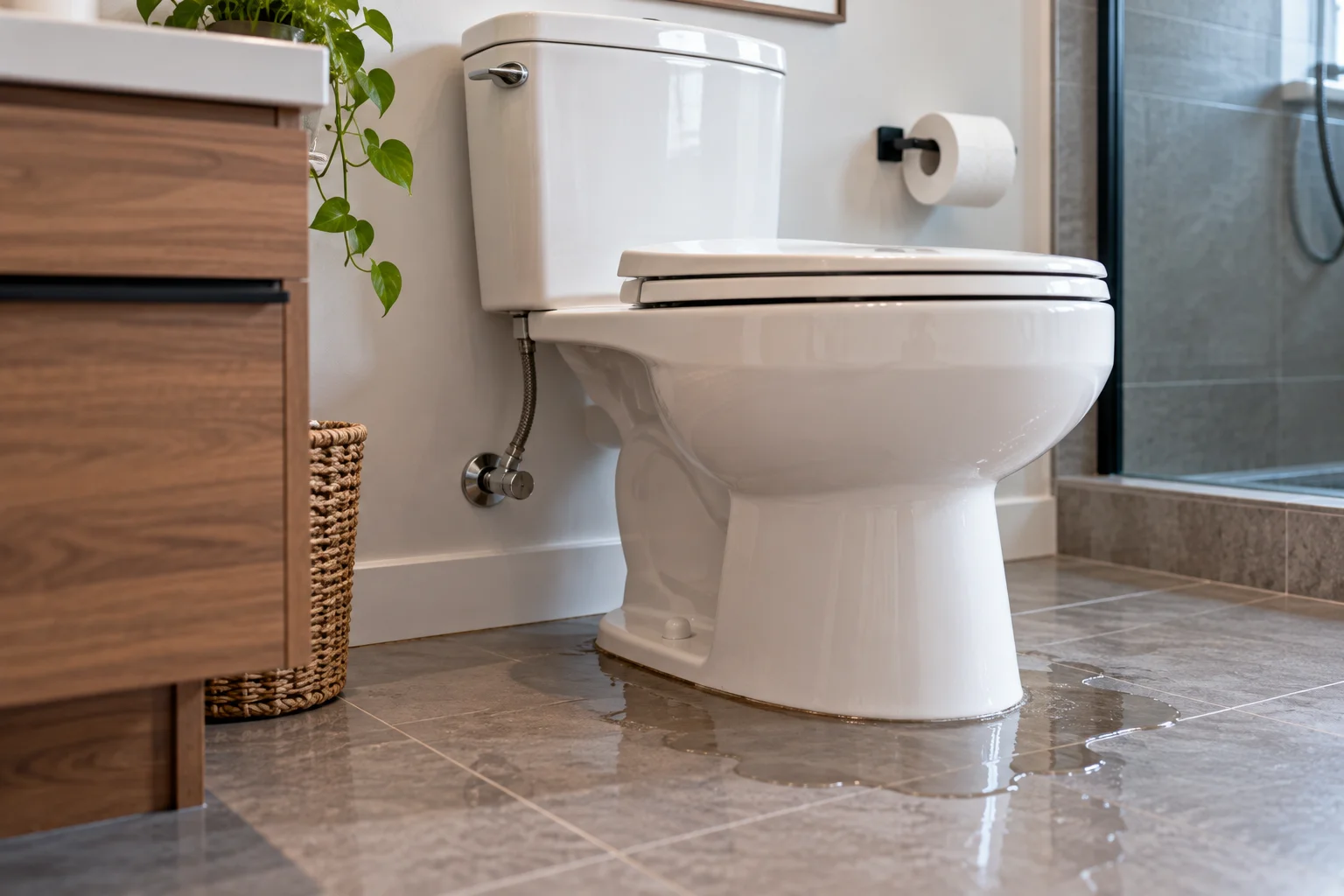
FIND THE CAUSE FIRST
Not Every Toilet Problem Comes From the Same Place
A toilet is connected to both the home’s water supply and its drainage system. That means similar symptoms can have very different causes. Constant running may originate inside the tank, while water on the floor can come from the supply connection, tank, bowl or seal at the base.
Flushing problems require the same kind of diagnosis. A toilet may have a problem with its internal flushing components, but slow drainage, rising bowl water or repeated backups can also indicate a restriction farther into the drainage system.
Proflow approaches toilet repair by identifying where the problem begins instead of replacing parts simply because they’re accessible.
COMMON TOILET PROBLEMS
What Is Your Toilet Doing?
The symptom is useful, but it doesn’t always identify the failed component by itself.
Constantly Running
Water continues moving through the toilet after the flush cycle should have finished.
Refilling by Itself
The toilet periodically starts refilling even though nobody has used it.
Weak Flush
The bowl does not clear normally or requires more than one flush.
Water Around the Base
Moisture appears on the floor around or immediately beside the toilet.
Tank Keeps Filling
The fill cycle runs too long, doesn’t shut off properly or behaves inconsistently.
Loose or Rocking Toilet
The fixture moves when used instead of remaining firmly seated.
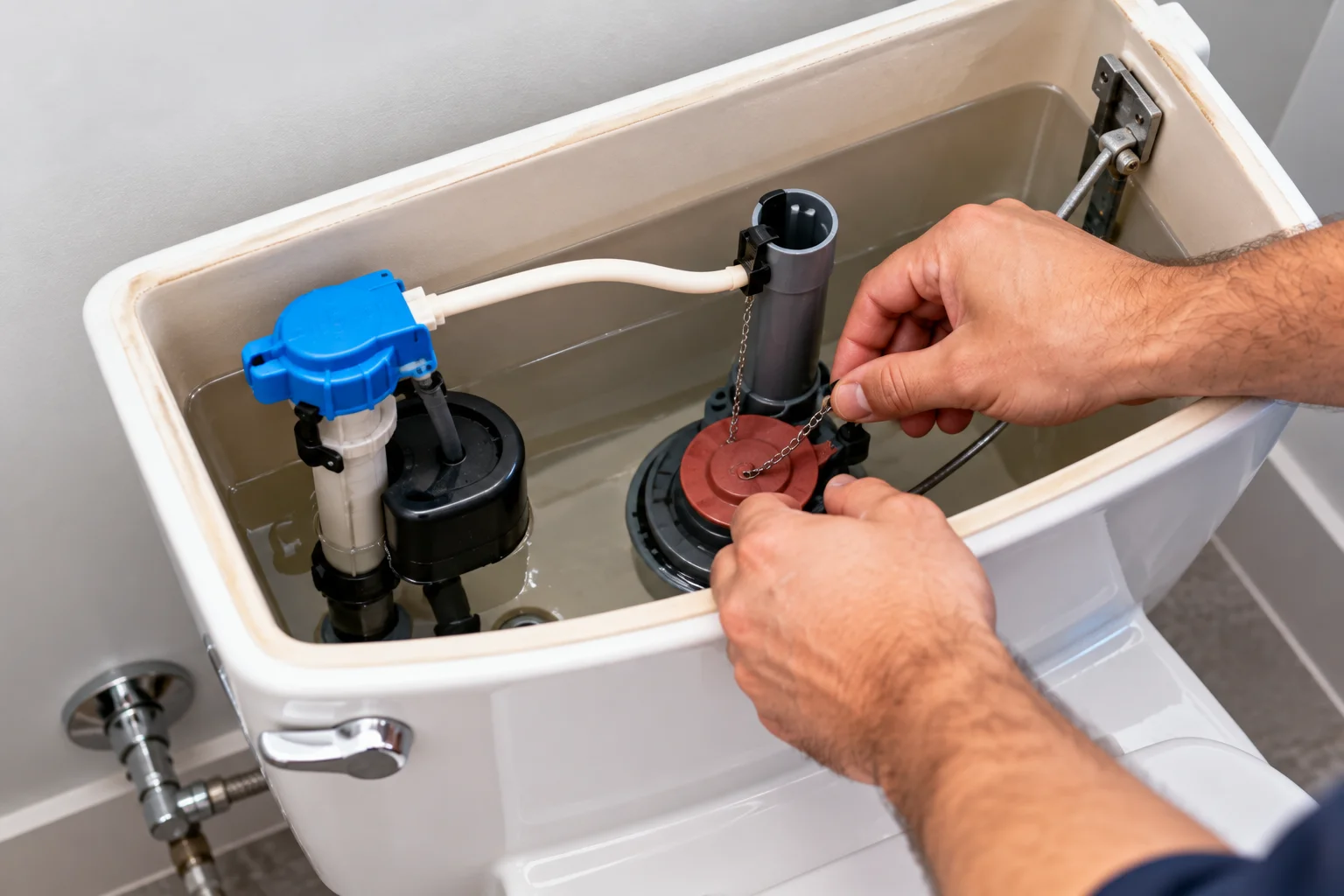
Inside the tank
Small components control how the toilet fills, holds water
and releases it during a flush.
INSIDE THE TOILET TANK
Many Toilet Problems Start With the Flush & Fill Mechanism
The tank contains several components that work together every time the toilet is flushed. Wear, incorrect adjustment or a component that no longer seals properly can cause water to continue moving when it shouldn’t.
Fill Valve
Controls the incoming water used to refill the tank after each flush.
Flapper / Flush Seal
Opens during flushing and then needs to seal correctly so tank water is not continually lost into the bowl.
Flush Valve & Overflow
Form part of the tank’s flushing and water-control system and can contribute to persistent running or leakage.
Handle, Lever & Chain
Transfer the movement of the flush handle to the internal flushing mechanism.
TOILET LEAKS
Water on the Floor Doesn’t Automatically Mean the Toilet Itself Is Cracked
Before deciding a toilet needs replacement, the source of the water should be identified.
01
Supply Connection
Water can escape from the shutoff valve, supply line or connection where water enters the toilet.
02
Tank Connections
Tank hardware and seals can allow water to travel down the exterior of the fixture.
03
Base Seal
Leakage around the toilet-to-drain connection can appear at floor level and requires proper investigation.
04
Fixture Damage
Porcelain damage can sometimes be responsible for leakage and may change whether repair or replacement is appropriate.
Water is visible but the source isn’t obvious?
Explore Leak Detection →
THE TOILET THAT NEVER REALLY STOPS
Why Does a Toilet Keep Running or Refill by Itself?
After a normal flush, the tank should refill to its operating level and the incoming water should stop. If water continues flowing, the tank repeatedly refills or you hear the toilet activate between uses, water may be escaping from the tank or the fill mechanism may not be shutting off correctly.
The sound can seem minor, but a toilet that continually cycles is using water when the fixture is not being used. Diagnosis should determine whether the issue involves sealing, adjustment, the fill mechanism or another tank component.
Replacing the correct failed component can often restore normal operation without replacing the entire toilet.
TOILET PROBLEM OR DRAIN PROBLEM?
A Poor Flush Isn’t Always a Fault Inside the Toilet
If the bowl rises unusually high, drains slowly, repeatedly clogs or other nearby fixtures are also having drainage problems, the issue may extend beyond the toilet’s internal components.
In those situations, treating the problem as a tank repair won’t address a restriction in the connected drain system. The drainage side needs to be considered separately.
DIAGNOSIS & REPAIR
How We Approach a Toilet Problem
01
Identify the Symptom
Determine whether the concern involves filling, flushing, leakage, movement or drainage.
02
Inspect the Fixture
Check relevant accessible tank components, connections, supply plumbing and the toilet itself.
03
Trace the Cause
Separate a toilet-component problem from a leak, supply issue or downstream drainage problem.
04
Repair the Problem
Address the component or connection responsible rather than replacing unrelated parts.
05
Test Operation
Flush and refill the toilet to check normal operation after the repair.
REPAIR OR REPLACE?
When Does Toilet Replacement Make More Sense?
Many toilet problems are repairable. Fill valves, flush components, seals, supply connections and other serviceable parts can often be addressed without replacing the complete fixture.
Replacement becomes a more relevant discussion when the porcelain itself is damaged, the fixture has persistent problems, repair is no longer practical or the homeowner already wants to upgrade the toilet.
The decision should be based on what has actually failed and the condition of the fixture—not simply its age.
Explore Toilet Installation →
DON’T IGNORE THESE SIGNS
When a Toilet Problem Deserves Attention
Water appears around the base
Find the source instead of repeatedly drying the floor and assuming the problem has stopped.
The toilet runs between uses
Unexplained refill cycles can indicate that tank water is being lost or the fill system isn’t operating correctly.
The toilet rocks or moves
Movement should be investigated rather than treated as a normal characteristic of the fixture.
Flushing performance suddenly changes
A new flushing problem can come from the toilet mechanism or from the connected drainage system.
COMMON QUESTIONS
Toilet Repair FAQ
Understanding the symptom can help narrow down whether the problem is inside the toilet or elsewhere in the plumbing.
Why does my toilet keep running after I flush it?
The tank may not be sealing or refilling correctly. The fill valve, flapper or flush mechanism are among the components that may need inspection.
Why does my toilet randomly refill when nobody uses it?
If water slowly escapes from the tank, the fill system can activate periodically to restore the water level. The cause should be diagnosed rather than simply adjusting the handle.
Why is there water around the bottom of my toilet?
Water at floor level can have several sources, including supply connections, tank leakage, the toilet-to-drain seal or fixture damage. The actual source should be identified before deciding on the repair.
Does a weak flush mean my toilet is broken?
Not necessarily. Internal toilet components can affect flushing, but a drainage restriction can produce similar symptoms. Slow drainage, rising bowl water or repeated clogs can justify investigating the drain system as well.
Can a running toilet waste water?
Yes. If water continually passes through the fixture or the tank repeatedly refills between uses, water is being used even when nobody is actively using the toilet.
Can a rocking toilet be repaired?
The cause first needs to be determined. A toilet should normally remain stable during use, so movement can warrant inspection of the installation and surrounding conditions.
Should I repair or replace an older toilet?
Age alone doesn’t determine the answer. The failed component, fixture condition, repair practicality and whether you want to upgrade the toilet should all be considered.
What if the toilet keeps clogging after being cleared?
Repeated clogging can indicate that the issue is not limited to the toilet’s tank components. The toilet outlet and connected drainage system may need further investigation.
TOILET REPAIR
Something Isn’t Right With Your Toilet?
Let Proflow determine whether the problem is the fixture, its plumbing connections or the drainage system behind it.

