
HIDDEN LEAKS • WATER LOSS • DIAGNOSIS
Leak Detection in British Columbia
Water stains, unexplained moisture or a rising water bill can point to a leak you can’t see. Proflow helps locate plumbing leaks and identify where the problem is coming from.
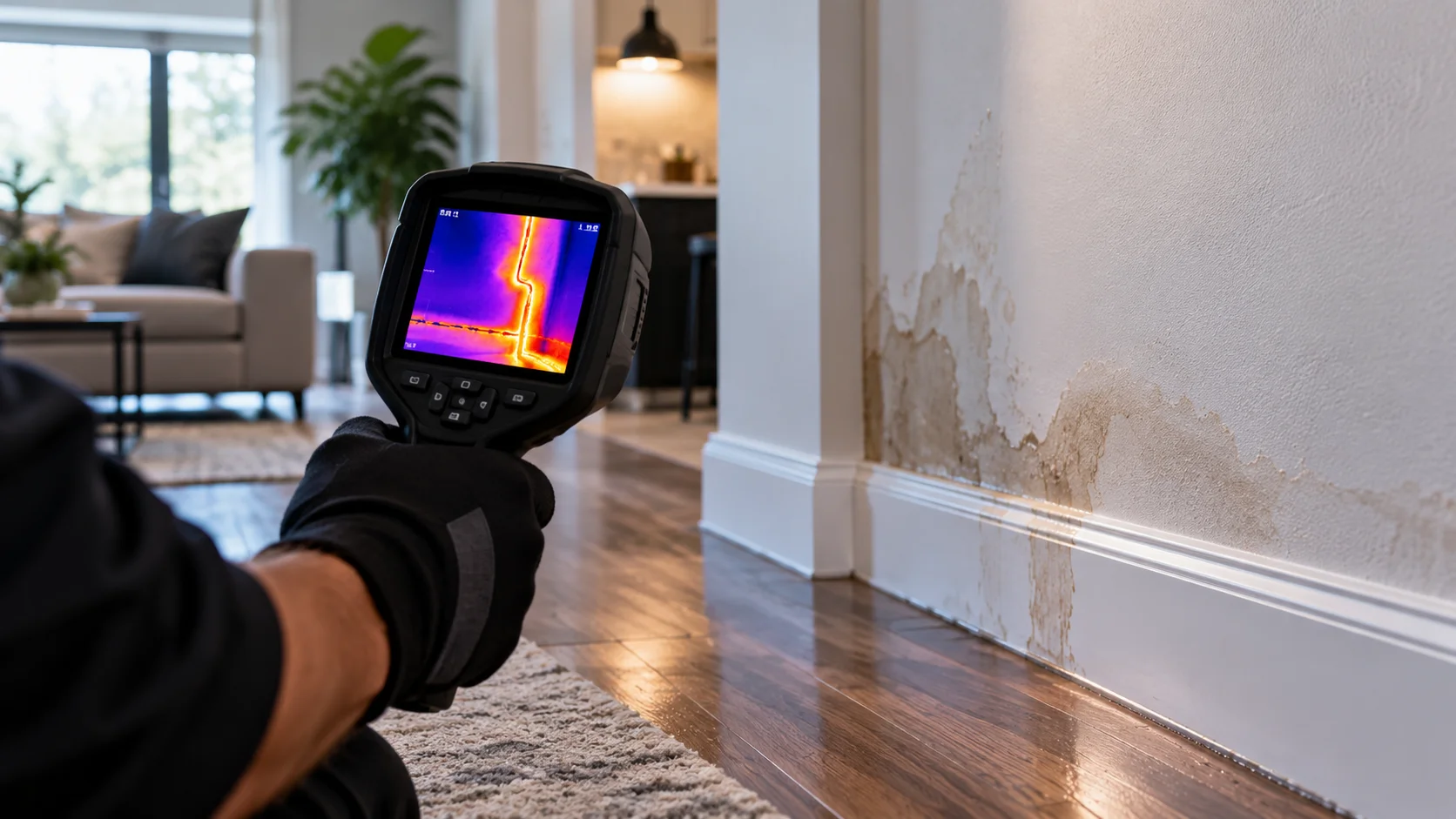
THE GOAL
Find the source before deciding what needs repair.
THE CLUES
You Can Have a Plumbing Leak Without Seeing the Pipe.
Hidden leaks often show themselves through changes elsewhere in the property. What looks like a wall, floor or ceiling problem may actually begin with plumbing behind it.
01
Water stains
Discolouration appearing on walls or ceilings.
02
Damp areas
Moisture around walls, cabinets, floors or fixtures.
03
Water sounds
Running or dripping sounds when fixtures aren’t being used.
04
Pressure changes
Unexpected changes in normal water pressure.
05
Higher water use
Water consumption increasing without an obvious reason.
?
LOCATE BEFORE REPAIR
The Wet Spot Isn’t Always the Source.
Water can travel along pipes, framing and building materials before becoming visible.
That means opening the wall exactly where a stain appears does not necessarily reveal the failed pipe. Leak detection starts by considering the plumbing layout, visible symptoms and the behaviour of the water before deciding where the likely source is located.
Depending on the situation, inspection and diagnostic tools can help narrow down the affected area and determine the appropriate next step.
WHERE LEAKS HIDE
Common Areas Worth Investigating
01
Behind Walls
Water supply and fixture connections can leak inside finished wall cavities.
02
Under Sinks & Cabinets
Connections and supply lines may leak slowly before becoming obvious.
03
Ceilings
Plumbing from bathrooms or other fixtures above can produce staining below.
04
Around Fixtures
Toilets, showers, tubs, faucets and other fixtures can develop leaks around their connections.
05
Utility Areas
Water heaters and connected plumbing can create moisture that spreads beyond the immediate source.
06
Not Sure Where?
That’s exactly when locating the source becomes more important than guessing at the repair.
DON’T IGNORE THE SIGNS
A Small Leak Can Affect More Than the Pipe.
Ongoing water leakage can affect drywall, cabinetry, flooring and other surrounding materials. Even when the amount of visible water seems small, the source may have been leaking for longer than expected.
Finding the source earlier allows the plumbing problem to be addressed before additional water continues entering the surrounding area.
Have a leak investigated →
LEAK DETECTION FAQ
Questions About Hidden Leaks
How do I know if I have a hidden water leak?
Possible signs include unexplained dampness, water stains, unusual water sounds, pressure changes or increased water consumption. These signs do not always confirm a leak, so the source needs to be investigated.
Does a water stain show exactly where the pipe is leaking?
Not necessarily. Water can move along pipes, framing and other building materials before appearing at a visible location.
Can plumbing leaks happen behind walls?
Yes. Supply lines, connections and other plumbing can develop leaks inside wall cavities and other concealed areas.
What happens after a leak is located?
Once the likely source and affected plumbing are identified, the appropriate repair can be assessed based on the type, location and condition of the plumbing.
SEEING SIGNS OF A LEAK?

